American War of Independence 1775 - 1783
The first of a series of wars of independence that ended European control of both North and South America. The conflict between Britain and her American colonists was triggered by the financial costs of the Anglo-French wars of the previous thirty years, in particular the Seven Years War (1756-63). A principal theatre of conflict had been in North America, where it was felt that the colonials had failed to play their part either financially or in the fighting. In the years immediately after the war, the army in North America consumed 4% of British government spending. This cost, combined with the victories over the French had increased British interest in their colonies. Ironically, those victories had also removed one element tying the Americans to Britain - fear of French strangulation. In 1756, the French held Canada, the Ohio Valley and the Mississippi, isolating the British colonies on the eastern seaboard. By 1763 that threat had been removed. At the heart of the division between the colonists and Britain was a fundamentally different concept of the purpose of the colonies. To the British, their American lands were there largely to provide raw materials to Britain and be consumers of British manufactured goods. This feeling expressed itself in an increasing control and restriction of American trade and industry that helped to build up resentment, especially in New England, where manufacturing goods for export to the southern colonies was already an important part of the local economy. In contrast, many of the colonists saw themselves as carving a new society from the wilderness, unrestricted by decisions made 3,000 miles away across the Atlantic. These pressures were tolerable as long as British regulation of the rules was fairly lax. However, in the decade before the colonies rebelled there was a new level of interest in exploiting the American colonies. The first move was an attempt to limit further expansion by the colonies. In 1763 it was decided to draw a border behind the existing colonies, along the line of the Alleghenies. The land to the west was to be left to the Indians, who were to be encouraged to become consumers of British goods. New colonists were to be encouraged to go north to Nova Scotia, where they could produce much needed timber for the navy, or south to Florida. This limit on their expansion caused much discontent amongst the colonies, costing many, including George Washington, a good deal of money. The next increase in the tension came in 1765 with the Stamp Act and a trade act know as the Sugar Act. It was the Stamp Act that caused the most protest. This was a direct tax, levied on the paper required for legal transactions and on newspapers. It had been proposed in 1764, and the Americans had been given the year to suggest alternative methods of raising the money needed to administer and defend the colonies. Instead, this year was used to organise opposition to the act. The Stamp Act caused hostility for a variety of reasons. First, the policy of limiting westward expansion that it was intended to help fund was not popular in the colonies. Second, it was the first direct taxation to be imposed on the colonies from London. All previous taxation had been in the form of trade duties. Finally, the act brought to the fore an issue that was bound to eventually emerge - the status of the legislative assemblies that existed in several of the colonies. In Britain they were considered to be subordinate to Westminster on all issues, in the colonies a new theory emerged that the Westminster Parliament had control over imperial issues, but not over colonial taxation. Combined with a boycott of British goods, the riots caused by the Stamp Act caused the fall of the government of Lord Grenville. The new government of Lord Rockingham repealed the Stamp Act in 1766, but at the same time passed a Declaratory Act confirming Parliamentary authority over the colonies. The next government attempt to raise money was the Revenue Act of 1767. Put forward by Charles Townshend, then Chancellor of the Exchequer, this was a scheme based on indirect taxes on trade, organised across all of the colonies by a board of commissioners. Townshend suggested that the proceeds could fund both the armed forces needed on the borders, and a civil list that could free royal governors from any need to rely on colonial assemblies for funding. The government had reasonable grounds to expect that this new approach would be acceptable - during the controversy over the Stamp Acts the colonists had accepted the validity of indirect taxation - but instead it was to face protest on both sides of the Atlantic. In Britain the protest came from those merchants whose exports were being taxed and then boycotted. In America the Revenue Act aroused deep suspicion. The talk of a civil list convinced many that the Act was designed to impose absolute authority from Britain. With an expected yield of only £40,000, it was unlikely that any money would be left after the army had been paid for, so these fears were unjustified, but the more radical voices amongst the colonists were able to link the Declaratory Act and the Revenue Act and create a British plot to destroy all colonial liberties. The Revenue Act was commonly held to have overstepped the natural laws that limited the authority of Parliament. From Massachusetts Samuel Adams issued a circular letter calling for common action against the Act. At first this letter appeared to have had little impact, until Lord Hillsborough issued a counter-circular to the colonial governors instructing them to ignore Adams' letter, while the Massachusetts assembly was suspended. The Massachusetts protest now became a focus of discontent, convincing many, including George Washington that the British government was intent on gaining total control of the colonies. A campaign of non-importation was launched, although the smuggling of English goods did not stop. Non-importation hit the American ports hard, especially Boston, where lawless conditions eventually forced the British to post troops in the city. Meanwhile, a change of government in Britain brought Lord North to power (1770). By 1769 the British government had decided to abolish all but the duties on Tea, and in 1770 Lord North removed all the other duties. Tea was retained in part as a symbol of sovereignty and in part because it raised just over £11,000 each year. At the same time non-importation collapsed in the colonies as the spread of lawlessness convinced colonial opinion that resistance to the Revenue Act was threatening the stability of society. On 5 March 1770 a Boston mob attacked a company of soldiers guarding the customs house. The soldiers stood firm until one was knocked down by the rioters at which point the soldiers were ordered to fire, killing five of the rioters ('Boston Massacre'). While some radical campaigners saw this as a sign of what they saw as the brutality of British rule, much colonial opinion was repulsed by the actions of the mob. This was especially true in New York, where a radical leader, Alexander McDougall, had used the economic crisis in the port to threaten the authority of the New York Assembly. A conservative reaction set in in New York and at the end of the summer of 1770 New York abandoned non-importation, which soon collapsed across the colonies, leaving only an unwillingness to drink taxed tea. For the next three years it looked as if the danger of a colonial revolt had been averted. Lord North made little or no effort to interfere in the colonies, while in America inter-colony rivalry revived, as typified by the activities of the Green Mountain boys. However, this image was false. The return to even grudging loyalty only lasted for as long as the British didn't act. Expectations and attitudes on the two sides of the Atlantic were too far apart for any permanent understanding to be established within the Empire. It was this gulf that gave the issue that finally led to war its potency. The crisis was caused by the financial losses suffered by the British East India Company as it moved from trading concern to political authority. Part of Lord North's plan for restoring the fortunes of the company, seen as vital for reducing the national debt, was a scheme for disposing of the Company's Tea surplus. Previously, East India Company tea had to imported into England, where it paid 1s tax before being exported to American by English middlemen, who paid a further 3d. North gave the Company permission to sell direct to the American colonies, paying only the 3d duty. If implemented this would have halved the cost of tea in the colonies, from 20s. per pound to only 10s. This new policy worried the radicals in the colonies. The boycott on Tea was the only protest against British rule that was still effective, and there was a great fear amongst radical opinion that this new cheap tea would end that boycott. In New York and Philadelphia, where smuggling was rife, the boycott of taxed tea was secure, but Boston was seen as a weak point. Too well policed for smuggling, the radicals were afraid that if tea was landed in the port, it would be drunk across the colonies, breaking the boycott. Their reaction was to prevent the tea from being landed. On 16 December 1773 a group of Boston radicals, dressed as Indian braves, dumped thousands of pounds worth of tea into the harbour, a protest immortalised as the Boston Tea Party. The British reaction was critical. A low-key response could have defused the situation, but instead Lord North decided on confrontation. The reaction to events in Boston in 1770 led the government to expect that the other colonies would once again repudiate radical action in Massachusetts. However, the actions taken by Lord North's ministry could not have been more offensive to colonial sensibilities. Early in 1774 a series of acts, called the 'coercive' or 'intolerable' acts in the colonies, were passed in an attempt to restore order in Boston and Massachusetts. The port was closed until the lost tea had been paid for. The governor was given the power to transfer trials to Britain. Boston was made to provide barracks for troops inside the town. Finally, the constitution of the colony was changed. Massachusetts had a two chamber system, with an elected house of representatives who had the power to appoint the upper house, or councillors. This was now changed so that the Crown could appoint the councillors. Rather than isolating Massachusetts, these acts united the colonies in protest. In particular, British interference with the constitution of one of the colonies was felt to threaten all. At the same time news of the Quebec Act reached the colonies. This was a sensible response to the problem facing in Canada of ruling a largely French population, only recently conquered. It allowed for tolerance of French Catholicism, even giving the Catholic majority a place on the new Canadian council. Canada's borders were also expanded to include the areas of Illinois and Detroit, where there was already a French population. In the thirteen colonies this act caused great hostility. Once again westward expansion had been blocked. Worse, at least as far as New England was concerned, was the tolerant attitude to Catholicism. The colonial response was the first Continental Congress, which met in Philadelphia in September 1774. When this Congress met it demanded the repeal of all colonial legislation passed since 1763. Until this demand was agreed to, Congress agreed to block all imports and exports to and from Britain other than those crops which the southern states depended on, to refuse to pay any taxes to Britain and to prepare to resist any British troops. However, the Congress did not at this stage want independence. Despite this, conflict was now inevitable. In British eyes Congress was an illegal body, not to be dealt with. Even so, opinion was split on how to respond to American discontent. In November George III was already certain that there would be fighting, but there were still conciliatory voices in Parliament. In America, General Gage, now Governor of Massachusetts as well as commander in chief of the British forces in North America, warned that the discontent was widespread and requested large-scale reinforcements, but back in Britain the scale of the trouble was not yet appreciated. Lord North was not alone in seeing Massachusetts as the heart of the problem, and in April 1775 that idea was reinforced by the first fighting. 1775 The War begins The first shots of the war were fired in Massachusetts. Here the most rebellious of the colonies was faced by General Thomas Gage, Governor of Massachusetts and commander-in-chief of all British troops in North America. Lord North had considered the colony to be in revolt from February, but failed to appreciate either the scale of the discontent in Massachusetts or that it was also present across the other colonies. The fighting began with a relatively minor skirmish. On 19 April 1775 Gage despatched a column to seize an arms cache thought to be at the town of Concord, only 16 miles from Boston. Unluckily news of the expedition leaked, and at Lexington the British encountered a small force of American militia. It is not known which side fired the first shots of the war, but the militia withdrew and the British continued to Concord. However, it was the return to Boston that revealed the scale of the revolt and the weakness of the British position. Outnumbered by hostile forces, the British column was being slowly destroyed by sniping until it met up with a relief force at Lexington and was able to return relatively safely to Boston. News of the fighting spread quickly, and Gage soon found himself besieged in Boston by an irregular but large force, which quickly dug itself in. Meanwhile, Gage was waiting for reinforcements. On 26 May they arrived, led by three major-generals who were to play an important part in the war - William Howe, Henry Clinton and John Burgoyne. Encouraged by his reinforcements, Gage decided to strengthen his position by capturing key hills that overlooked Boston on its island, and threatened the harbour. The Americans learnt of this plan, and fortified Breed's Hill on the Charlestown peninsular north of the harbour. The resulting battle of Bunker Hill (17 June 1775) was a disaster for the British. Although they did manage to capture the American positions, it was at the cost of half of their force killed or wounded. Bunker Hill effectively knocked the main British army out of the war for the next year. For nine months it remained in Boston, now commanded by Howe, who failed to appreciate the weakness of the American forces facing him. Washington and the Continental Army The dominating figure of the war now entered the scene. On 15 June 1775 George Washington was appointed commander of the new Continental army, created in the same month out of the forces besieging Boston. Washington was to face formidable problems in his task. First amongst them was the persistent belief in the ability of the militia to win the war without a permanent professional army. This belief in the militia system had been one of the problems faced by the British in their attempts to raise taxes in America. His second problem was that troops from the different colonies were often unwilling to serve away from their colony, or in mixed units with men from other colonies. A third problem was that the army was not properly supplied, a problem that remained for most of the war. Fourth, many of his men were serving for short periods of time and several operations, such as the 1775 invasion of Canada, were adversely effected by enlistments ending. Finally, the rebellious attitude that had prompted many to join the army also made them resistant to taking orders from officers they had not selected. Washington was to have frequent problems getting men to accept the principle that the best man should have a post, not simply the one who had served for longest. Washington's most important contribute to the war was the patience with which he turned the forces he found outside Boston into an army that was eventually able to take on regular British troops on the battlefield. The Revolt Spreads Away from Boston there were very few resources that could be used to maintain Royal authority. Over the summer of 1775 news of the fighting around Boston inflamed revolutionary activity across the colonies. A series of Royal governors were forced to flee to the safety of Royal Navy ships. All across the colonies, sizable militias were formed, leaving the small British garrisons vulnerable. A lack of appreciation of the scale of unrest meant that little or no aid could be expected until the following year, if at all. This allowed the American cause to gain vital momentum. Invasion of Canada The only American setback of 1775 came in their invasion of Canada. Their invasion was based on the expectation that the recently conquered French of Quebec would rush to the aid of the invasion. If that had happened, then the weak British garrison of Canada, already used to reinforce Boston, could have been overwhelmed. As it was, the French population was relatively happy under British rule, and the Americans found themselves operating without popular support. The campaign began slowly, with one advance along Lake Champlain starting in May and continuing until the surrender of St. Johns on 2 November. Another force further north was defeated outside Montreal on 25 September. Finally, a third force of 1050, under Benedict Arnold, was sent through Maine to the St. Lawrence. This force, reduced to 600 on the march, arrived outside Quebec on 9 November. Facing them was a hastily formed force commanded by Major-General Guy Carleton, the British commander in Canada. Most of his regular troops had been captured, so the defence was based on Loyalists, French militia, sailors and marines, with a small core of regulars. Despite their apparent strength, the American force in front of Quebec, one thousand strong by early December, suffered from one major handicap - their soldiers period of service was due to end on 31 December. Faced with this, the Americans attempted to take the city by assault early on 31 December (battle of Quebec). The failure of this assault ended the best chance the Americans had for victory in Canada. 1776 The British Respond The British response to the revolt was to be directed by the new Secretary of State for the American colonies, Lord George Germain, who held the post from November 1775 until he was replaced in February 1782. Germain had been disgraced after his role in the battle of Minden (1759). He had spent the intervening years attempting to rebuild his reputation, which may help explain his aggressive stance as Secretary of State. Despite his distance from the fighting, Germain was to control most British strategy during the war. By the start of 1776 it was clear even in Britain that the colonial revolt was not the work of a small number of malcontents. The British response was to plan what was then the biggest transatlantic expedition ever carried out. Troops sent from Britain were to be sent to three separate theatres of war, there to reinforce the troops already present. The first campaign was to be in Canada, where the American invasion was to be repulsed, followed by a march down to the Hudson. The second was to be sent to reinforce the forces in Boston, to be used to capture New York and perhaps meet up with the army marching down from Canada. Finally, a third force was to be sent to the south, where it was confidently expected that the loyalists would rise against the rebels as soon as a British army arrived. Two of these three expeditions would achieve at least partial success, but the year ended with the British no nearer to ending the revolt. Independence! The main event of 1776 was not to come on the battlefields. On 4 July 1776 the Declaration of Independence was signed. The desire for independence had not been amongst the causes of the war, but at the start of 1776 Tom Paine published Common Sense. This challenged the idea that reconciliation with Britain was possible and instead spoke out strongly for the idea of independence. This work sold over 100,000 copies, and made public a debate that had been happening in private. Over the first half of 1776 the mood shifted towards independence, with several states making it clear that they would support the idea. Finally, on 7 June a motion to declare independence came before Congress. After a series of debates, Congress postponed their final decision until 1 July, but also appointed a committee to draft a declaration in case one was needed. This committee, dominated by Thomas Jefferson, finished the draft on 28 June, just in time for Congress. By this point all the states apart from New York had approved independence although Pennsylvania was also unconvinced. Congress finally approved a slightly modified declaration on 2 July. On 4 July the Declaration of Independence was approved by Congress, although New York did not sign until 15 July. The Declaration of Independence was a momentous event. It gave a clarity to the American cause that it had previously lacked, and that the British were never to gain. It played a part in convincing foreign powers to help the rebels, overcoming a fear that a reconciliation between Britain and the colonies could cause any intervention to backfire. It also made any hopes of a peaceful settlement much less likely - Independence once declared could not easily be surrendered. Clearance of Canada Despite the failure of their assault (see battle of Quebec), and a manpower shortage caused by expiring periods of enlistment, the Americans attempted to maintain their siege of Quebec. Already hampered by their lack of proper siege equipment, the Americans were also short of money, and on 4 March declared anyone who would not take their paper money to be an enemy. What little local support they had enjoyed now evaporated. Their position in Canada was only secure while the ice prevented the British from sending relief forces in. When the ice broke, the American garrison at Montreal departed, while the army besieging Quebec withdrew when a British relief force arrived on 6 May. The Americans withdrew nearly one hundred miles up the St. Lawrence to Sorel at the junction with the Richelieu River. Reinforced, the American force advanced back up the St. Lawrence and attempted a surprise attack on the British camp. The resulting battle of Trois Rivieres (Three Rivers, 8 June 1776) resulted in an heavy American defeat, rapidly followed by the abandonment of the Canadian adventure, not to be repeated until the War of 1812. Failure In The South The southern expedition went wrong almost from the beginning. The naval expedition under Sir Peter Parker was meant to leave Cork on 1 December 1775, arriving off Cape Fear in early February, allowing time for a campaign in the south before moving on to New York. It was confidently expected that General Henry Clinton, commanding the land forces already in the area, would find many loyalists ready to join the British. However, the loyalists had been defeated at Widow Moore's Creek on 27 February, two weeks before Clinton arrived (12 March), while the fleet didn't leave Cork until mid February 1776. The first ships reached America on 18 April, but the rest of the fleet trailed in, Cornwallis (commanding the reinforcements) only arriving on 3 May. The British troops were in a poor condition, especially the reinforcements, who had spent three months at sea, and Clinton would have preferred to abandon any plans in the south. Parker on the other hand was keen for action. There were reports that the defences of Charleston were in poor condition and so it was decided to attack Sullivan's Island, whose fortifications guarded the southern approaches to Charleston Harbour. The British plan was to launch a two pronged attack - Clinton with 2,000 men would wade across shallows linking Sullivan's Island to Long Island, while Parker bombarded the fortifications from the sea. However, on the day of the attack, 28 June, the weather and the seas were not as the British had expected them to be. The water between Long Island and Sullivan's Island was far too deep to wade, while Parker was unable to get his ships as close as he had expected and came under a devastating fire from the American guns. When night fell the British ships were forced to withdraw, having suffered serious damage. With the failure of the attack on Charleston British activity in the south ended for two years. Attack on New York The main British army began the year blockaded in Boston. Outside the city Washington had managed to put together a formidable army of over 17,000 men by February. He had also built up his stocks of artillery and powder to the level where he could carry out a proper siege. In Boston the British army had endured months of boredom punctuated by occasional alarms, and discipline in the army was poor. General Gage had now been replaced by General William Howe, who was had been given permission to evacuate Boston if the situation justified it. Howe was convinced that he should leave, but did not have enough ships for a proper evacuation and was waiting for more transports when, on 2 March, the Americans began their artillery bombardment. They then captured the Dorchester Heights, overlooking Boston Harbour. The British position was now untenable, and Howe decided to withdraw in the ships he already had. After destroying the military supplies in the city, Howe and his army departed for Halifax on 17 March. The Americans let him go in peace in return for an agreement not to burn the city before he left. Halifax was itself a poor location for an army. Supplies were still limited and the weather appalling, but Howe settled down for months while he planned his attack on New York. Now Boston was secure, the Americans were concentrating their forces around New York and building up the defences. Howe decided to wait until Clinton and the army in the south could join him. Howe finally decided to move in June. The British fleet was sighted on 29 June and the British army landed on Staten Island on 3 July. After Clinton arrived in mid-August Howe had 32,000 men under his command. Washington was faced by a serious problem. He was outnumbered, had limited supplies and no naval support. He had two main islands to defend - Long Island and Manhattan Island. If he split his forced between the two islands, Washington was well aware that they could be split in two and defeated in detail, but he had little or no choice. The Brooklyn Heights on Long Island overlooked New York. If they fell to the British then the city would be fatally exposed. Washington posted troops around Brooklyn village and fortified the hills surrounding the area. Howe made his move on 22 August. 15,000 men were landed on Long Island. Facing them the Americans were defending the Heights of Guan, a line of hills breached by four passes. Three were strongly held, but the furthest out was only guarded by five men. The British started to move on 26 August and early on the 27th they surprised the five guards and were able to march behind the American positions. The resulting battle of Long Island was a resounding British victory. The Americans were forced back into Brooklyn. Howe did not attack the American positions, recognising that it would have to be evacuated. Sure enough on 29-30 August Washington evacuated his position at Brooklyn. Howe now decided to try and trap Washington in New York. Congress now made it clear that Washington was not to risk being trapped in the city. He decided to withdraw to Harlem at the north end of Manhattan Island. While the Americans were engaged in this, Howe moved again. On 15 September he landed at Kip's Bay, overwhelming the militia defending the bay, and almost capturing Washington, who had ridden from Harlem on hearing of the British landings. The British had a chance to capture a large part of Washington's army but the forces still in New York managed to slip away along the west side of the army. The next day saw the 'battle' of Harlem Heights, a skirmish brought on by British carelessness and the last American victory for some time. The British were now free to occupy New York, where they were greeted by cheering crowds of loyalists. Howe now had a chance to inflict a crushing defeat on Washington's demoralised and outnumbered army. The Americans were digging in on the Harlem Heights, but again Howe outflanked them on the water, landing on Throg's Neck on 12 October. Washington was forced to withdraw, this time to White Plains. Once again Howe delayed. Finally on 28 October the British attacked again (battle of White Plains) and again inflicted a defeat on Washington. Again Washington withdrew, this time to North Castle. This time Howe did not follow, turning instead to Fort Washington, which with Fort Lee guarded the Hudson. By this point it was already clear that the Royal Navy was able to get past the forts without serious danger, and Washington considered abandoning the forts before being persuaded by the local commander, Nathanael Greene, and the commander of Fort Washington Robert Magaw that they could hold the fort. This was soon to be proved false. On 16 November Howe launched his attack on the badly planned American lines around the Fort. The American lines collapsed on three sides, and when the retreated troops reached Fort Washington, Magaw quickly decided to surrender. A few days later Fort Lee was also captured by the British. The American position was now perilous. 2000 militiamen had departed at the end of their period of service. Washington with 3000 men retreated as fast as he could towards Pennsylvania with Cornwallis in pursuit. The British were also tired, and the roads increasingly muddy, but Cornwallis still came close to catching Washington at New Brunswick on 1 December, but was under orders to proceed no further until Howe joined him. Once Howe arrived the chase began again, and again the British came close to catching Washington, but the Americans were able slip across the Delaware River into Pennsylvania. For a week Howe searched for boats to cross after the Americans, but with the weather turning cold he decided to send his army into winter quarters on 14 December. This decision has been criticised ever since, but at the time it made sense. Washington had suffered defeat after defeat and had been forced out of New York and now New Jersey. The weather was now bitterly cold, and it was clear that the winter had settled in. The Hessians left to guard the line of the Delaware still outnumbered Washington's remaining men. What has made Howe's decision the subject of such debate ever since is the extraordinary decision Washington now made. The Hessian line was spread thinly along the Delaware, and Washington decided to launch a counter attack. The first target was Trenton, to be followed by Princeton and perhaps New Brunswick if possible. With a force of 2,400 men Washington crossed the Delaware late on Christmas day. The next day he attacked the Hessian position. The Battle of Trenton is one of the most famous of the war. The Hessians were never able to form a proper line of battle. Although casualties were relatively light on both sides, over 1,000 Hessians were captured. Washington then withdrew back over the river in the expectation that the Hessians would react to retake their post. However instead they withdrew from all of their positions on the Delaware. Washington was able to cross back into Trenton, where by the start of 1777 he had 5000 men. Howe responded by sending Cornwallis with 5,500 men on a rapid march to Trenton. He arrived on 2 January to find Washington drawn up in a strong position. Cornwallis decided to wait overnight and attack the next day, but overnight Washington was able to slip away on a newly constructed road towards Princeton, while a small force remained at Trenton to fool Cornwallis. The next day Washington reached Princeton, where there were two regiments under Colonel Charles Mawhood. The battle of Princeton was a second American victory in just over a week. Mawhood managed to break through the initial American attack but his force was almost destroyed on the road to Trenton. Cornwallis, still at Trenton, decided to withdraw to New Brunswick. These two victories began to establish Washington's reputation, left looking threadbare after the disasters around New York. In a brief campaign he had prevented the disintegration of his army, thrown the British out of New Jersey and given the entire American cause a boost. 1777 1777 was the last year in which the British were able to concentrate on defeating their rebellious colonials. Instead, American success during the year encouraged the French to intervene on their side, virtually ensuring American success. The year began with much British optimism. During the year, the Americans were forced to react to British actions, without any clear idea of the British plans. The British were determined to force a decisive battle, but when one did happen the Americans were to win. The British operated two main armies in 1777. One, commanded by General Burgoyne, was to capture Ticonderoga and then march to the Hudson, from where it could split the Colonies in two. The second army, under Howe, had originally been committed to sending forces up the Hudson from New York to aid this advance, but before Burgoyne's force had begun its' march, Howe had already changed his plans to an invasion of Pennsylvania, with the capture of Philadelphia, then the American capital, as its main aim. This only left a token force to clear the Highlands upriver from New York. Lord Germain, commanding the war from London, approved both of these plans, and must take much of the blame for the disaster to follow. Howe's Campaign At the start of the year the main action involved Howe's army. He was faced by Washington, whose army in March only numbered 3,000. However, his numbers soon mounted, and he was able to take up a strong defensive position blocking the land route to Philadelphia. Howe missed his chance to try and force a decisive battle, and by April had decided to move his army by sea to Pennsylvania. A brief foray in late June was made in an unsuccessful attempt to lure Washington into battle. However, Howe's main failing was the slowness of his preparations. The soldiers only embarked between 9-11 July, and didn't sail until 23 July. Faulty intelligence convinced Howe that Washington had already moved towards the Delaware River to block him, so Howe decided to sail to the Chesapeake, a much longer voyage, and didn't make landfall until 25 August (at Elkton, Maryland).While Howe delayed, Washington had been able to sent troops to help face Burgoyne, the first serious consequence of the slow start to the campaign. The second was that Howe was denied the time to take advantage of any victories he gained. Howe was soon to have the chance to win his victories. Washington now moved to protect Philadelphia, determined to do better than in the previous year before New York. He was certainly in a better position than in 1776, with a more experienced, better equipped army, fighting over country that offered more chances for a successful defence of the rivers between Howe and the city. Washington first attempted to hold the line of the Brandywine River, but was dislodged by Howe (Battle of Brandywine, 11 September 1777). British tiredness and a lack of cavalry reduced the impact of the defeat, and Washington was again ready to fight five days later (Battle of the Clouds, 16 September 1777), but this time heavy rain intervened. Washington was forced to withdraw to re-supply, leaving a detachment under General Wayne to delay Howe. However, on the night of 20-21 September the British managed to catch Wayne's troops unaware (Paoli Massacre). A final attempt by Washington to hold the Schuylkill River was outflanked, and on 26th September 1777 Howe entered Philadelphia. Howe was now faced with a new problem. American forts blocked the Delaware, preventing him getting new supplies. Accordingly, he send sizable forces down river to clear the route to the sea. Underestimating the Americans, Howe with the remaining force, now under 9,000 strong, made camp at Germantown, just north of Philadelphia. The camp was not well defended, and Washington decided to attack. The resulting battle of Germantown (4 October 1777) saw Washington attempt an ambitious plan involving four separate columns attacking simultaneously. Although the attack failed, the battle was closely run and demonstrated that Pennsylvania would not be easily overrun. Even the Delaware was not cleared until mid-November. Howe's campaign thus ended without any decisive advantage to either side. The capture of Philadelphia had little practical value without the destruction of Washington's army - Congress simply moved to another location, and the British found themselves with another position to garrison for little practical benefit. Howe's achievement came a year too late, and was overshadowed by the fate of Burgoyne's army. Burgoyne's Campaign It is to that campaign that we will now turn. Burgoyne's campaign (The Saratoga Campaign) suffered from the start from the fractured command structure of the British forces. Having been in London over the winter, he arrived at Quebec on 6 May 1777 to find Carleton, the commander in Canada, unhappy at the loss of troops. His displeasure expressed itself in a lack of Canadian and Indian troops to accompany Burgoyne, a key element in the original plan. Burgoyne's plan was to march from Canada along the Richelieu River, then Lake Champlain before crossing the twenty mile gap to the Hudson River, from where they would march down-river to meet up with another force marching up from New York. The aim was to isolate New England from the remaining colonies, seen as the key to regaining control outside New England. However, even if Burgoyne's march had succeeded it is hard to see how the troops at his disposal could have achieved this aim. Only a line of forts along the river, well garrisoned and maintained by a fleet on the river could have had the desired effect. Even so, with Howe having achieved his aims, even a moderate success by Burgoyne could have had a significant impact on American morale. Burgoyne was expecting support from two directions. Least effective during the summer was General Clinton at New York, who refused to move unless reinforced. However, a second expedition did at least leave Canada. A force commanded by Lieutenant-Colonel Barry St. Leger reached Oswego on the south side of Lake Ontario on 25 July, intending to march down the Mohawk River to the Hudson. However, at Fort Stanwix, guarding the route to the Mohawk, St. Leger found a force nearly equal in size to his own, where he had been expecting little or no opposition. Despite the defeat of a militia column at the battle of Oriskany (6 August), St. Leger was forced to withdraw in the face of a relief column under Benedict Arnold. Burgoyne was on his own. Burgoyne's army had assembled at St. Johns on the Richelieu by mid-June. On 1 July they reached Ticonderoga, which Carleton had failed to take in the previous year. The stronghold was overlooked by Mount Defiance, unfortified because the Americans felt it was impossible to get artillery to the top. While Carleton had agreed with them, Burgoyne did not and was able to get his guns into a commanding position. On 5 July the American garrison withdrew from Ticonderoga. Burgoyne now made the first of a series of unfortunate decisions. Rather than follow Lake George, which led to a wagon trail that crossed a ten mile gape to the Hudson, he continued down Lake Champlain. The result of this was that his army had to cut its' own route through the wilderness. This territory was ideal for the Americans, as proved at the battle of Hubbardton (7 July 1777) where the Americans were able to use the cover of the woods to inflict serious damage on the British before being outflanked and driven off. Nevertheless, Burgoyne was able to cross the wilderness and reached Fort Edward, on the Hudson River. Burgoyne now made a second mistake. Instead of pressing on, he delayed in an attempt to re-supply. Attempts to open up the route up Lake George and get supplies from Ticonderoga failed, and led to the first serious defeat of the campaign. Hearing of a rebel magazine at the town of Bennington, Burgoyne sent a detachment of Germans to seize it, expecting Loyalist support. While 300 Loyalists did join this force they made little contribution, and on 16 August (battle of Bennington) the British force of 900 was destroyed. Due to his poor relations with Carleton, Burgoyne was also forced to provide garrisons along his route, and was now increasingly short of men. The forces facing him were steadily increasing. From August the American forces were commanded by General Gates. The defeat of St. Leger's advance down the Mohawk River had released a sizable force under Benedict Arnold and Gates now commanded some 6,000 men. Burgoyne was now faced with a simple choice. Staying put at Fort Edward was not an option, so he could either retire north toward Ticonderoga, or continue his advance. Despite the increasing strength of the American forces in front of him, it was the latter option that Burgoyne made. In perhaps his greatest mistake, on 13 and 14 September 1777 Burgoyne crossed over the Hudson, cutting himself off from Canada, and began his march south. He was not to get far. Gates had moved his forces north, fortifying Bemis Heights, a wooded area near Saratoga, with a force marginally larger than the British. Burgoyne decided to attack. The first battle of Saratoga, (or Freeman's Farm, 19 September 1777), saw the British advance in the teeth of sniping fire from the American advance guard, eventually forcing the American riflemen from the field, but failing to even reach the positions on Bemis Heights. Burgoyne was forced to withdraw to Saratoga, where he was to remain for the next three weeks while the American forces surrounding him rapidly increased in number. Even this late, Clinton was still not planning to move. Five days later, on 24 September, reinforcements arrived at New York, and Clinton decided to launch a limited attack on American positions in the New York Highlands, forty miles up the Hudson from New York. At this late date Burgoyne was still able to get messages through to Clinton. A letter written on 28 September informing Clinton of his position arrived within a couple of days, forcing Clinton, against his better judgement, to launch a dash up the Hudson. On 3 October he led 3,000 men in a rapid march up the river, taking a series of forts, culminating in the capture of Fort Constitution, near West Point on 7 October. The same day saw Burgoyne suffer a second defeat at the battle of Bemis Heights, or Second Saratoga. This developed out of an attempt at reconnaissance in prelude to a full attack and although it was not a major defeat, it ended any hope of a successful advance. Burgoyne now attempted to retreat, but found the route back to Canada blocked. For a week Burgoyne sat and waited for Clinton, before on 14 October beginning surrender negotiations with Gates. The following day Clinton's troops were as near as they came to Albany, the original aim of Burgoyne's march, but got no closer. On 17 October the British army under Burgoyne marched into captivity. As well as the immediate impact of the surrender and loss of troops, the fate of Burgoyne and his army demonstrated the inaccuracy of the British idea that Washington's army was the only significant American force. Any chance of taking or isolating New England was lost. Even the Highlands, taken by Clinton and an important link between New England and the rest of the colonies, were abandoned soon afterwards. The most important impact of Saratoga was not in America, but in Europe. In early December news of the surrender reached France, where interest in an American alliance was renewed. On 6 February 1778, France and America signed treaties of alliance and of amity and commerce. The Americans no longer fought alone. Ironically, this alliance with France nipped in the bud a growing peace movement amongst opposition politicians in Britain. News of the defeat had encouraged a belief that victory in America was neither possible nor worthwhile, but once it was clear France was becoming involved this attitude was no longer tenable. 1778 The most important event of 1778 was the entry of France into the war. The French had been providing aid to the Americans since 1776, although at the start of the war there were still mixed feeling in American about forming alliances with Britain's enemies. France was also a source of volunteers, such as Lafayette, while Paris was the base of the American agents in Europe. Negotiations for a full alliance proceeded slowly through 1777, affected by the progress of the war in America. News of the capture of Philadelphia reached France before that of Saratoga, briefly making an alliance look unlikely, but when news of the British defeat reached Paris the French indicated that they were ready to sign an alliance. Benjamin Franklin drafted the treaty, and on 6 February 1778 American and France signed a treaty of friendship and commerce and another of alliance. The treaty of alliance was only to come into effect if Britain and France were at war, giving the French control over when the alliance would come into effect. France agreed to recognise the independence of the United States and provide military assistance. The French agreed not to make peace until American independence was achieved, and both sides agreed not to make peace without the approval of the other. France also agreed to surrender all territorial claims on the continent of North America and thus that all conquests made in North America would be given to the United States (This referred to East and West Florida and to Canada, neither of which was in fact to be conquered by the Americans). The alliance between America and France was not immediately made public, although it was suspected and feared in Britain. Even without French intervention, the events of 1777 had forced the British to change their plans. The Hudson strategy, with one force marching down the Hudson from Canada to meet another marching up the Hudson from New York, was considered to have been a failure, although in reality it had not been tried - in 1776 the attack from Canada had stalled and in 1777 there was not attack from New York. Meanwhile, the British were hamstrung by an upcoming change of command. Howe had offered to resign on 22 October 1777, and on 4 February was told that his offer had been accepted. General Henry Clinton was to replace him, but he did not reach Philadelphia until 8 May, by which time he had received two sets of orders. The first set, issued on 8 March, ordered him to suspend major actions in the central and northern colonies and instead adopt a naval strategy, using New York as a base for attacks on the New England coastline. At the same time an expedition to Georgia and the Carolinas was to be planned, the first signs of the southern strategy that was to dominate the rest of the war. However, on 13 March the French acknowledged their American alliance, and although war between Britain and France did not start until 16 June, it was now inevitable and the British plan was changed accordingly. A second set of instructions was issued on 21 March. The war in the colonies was now to take a back seat. Clinton was to abandon Philadelphia, and return to New York, from where he was to send 5,000 men to attack St. Lucia, another 3,000 to reinforce the Floridas, now of sudden importance, and to detach yet more men to defend Halifax. The British aim was now to go on the offensive in the West Indies, while fighting a purely defensive war in America. Retreat From Philadelphia Luckily for the British, Washington also had his problems over the winter of 1777-8. On 21 December 1777 Washington and his 11,000 men had marched to Valley Forge, where they had made camp for the winter. Washington had picked Valley Forge for several convincing reasons. First, it was well positioned to watch the British, eighteen miles to the southeast at Philadelphia. Second, it was an easily defensible location on high ground. Third, it was in a largely unpopulated area and Washington did not want to alienate the population of Pennsylvania by inflicting a wintering army on them. Finally, there was some hope that supplies would be easier to find in Pennsylvania than had been the case in previous winters. However, the location also had its problems. There was little or no food present when the army arrived (the British had already searched the area earlier in the year), the remoteness of the location made it hard for supplies to reach the army, and when the army arrived there were no building for them to use. Across January and February the army faced near starvation, boredom and poor discipline. This began to change towards the end of February. First, the supply situation was improved by Nathanael Greene, head of the quartermasters department. He despatched foragers into neighbouring states and food finally reached the camp in decent quantities. Second, the discipline problem was relieved by the arrival of Frederick von Steuben, a Prussian volunteer, who reached Valley Forge towards the end of February. Although not the experienced soldier he claimed to be, Steuben turned out to be a highly proficient trainer of soldiers. When Washington and his army emerged from Valley Forge it was a much more proficient force than when it had entered it. Clinton finally prepared to leave Philadelphia in June. His main problem was the sheer size of his column. As well as 10,000 soldiers there were 1500 wagons and all of the support services that the army required. When fully stretched out on the march this supply train would cover twelve miles. Clinton finally moved out of Philadelphia at 3 in the morning on 18 June. His army crawled towards New York, covering only thirty-five miles in the next six days. Over the same days Washington managed to move his army, of a similar size but relatively unencumbered, fifty-seven miles. Despite this rapid march, there was no consensus in the American camp on what to do once they had caught up with the British. Advice ranged from leaving the British alone through to forcing a general engagement. Washington decided in favour of a limited engagement, and soon had his chance. On 26 June the British reached Monmouth Court House after two days of intense heat. The next day they paused to rest, and Washington decided to attack the British rearguard soon after it again began to march. Command of the force that would carry out this plan was given to Charles Lee, who had previously made clear his opposition to any such attack. His conduct on the next day was to effectively end his military career. The battle of Monmouth (28 June) developed from the original plan to attack the British rear. This attack went badly wrong, and the Americans were retreating in some chaos when Washington arrived and restored a temporary line, only minutes before Clinton with the main British force arrived on the scene. The battle now continued for the rest of the afternoon, with the British launching a series of poorly coordinated attacks, and the Americans standing up to them surprisingly well. Eventually the British were exhausted and stopped their attacks. Washington then ordered a general attack, but his army was too tired to carry it out. Overnight Clinton left the battlefield and continued his march. The British reached Sandy Point on 1 July from where they were transported by sea to New York. Both sides were able to see Monmouth as a victory. The British had been able to continue their march to New York, while the American regulars had stood up to British attacks, even recovering from an early retreat. The French Enter The War At the same time as Clinton's army was being shipped to New York, the first French force arrived in American waters. A French fleet under the Comte d'Estaing had been able to sail from Toulon and make its way to America after the British decided to keep their fleet in home waters to defend against a French invasion. The French fleet was larger than that commanded by Admiral Lord Richard Howe but the British fleet was safe in New York harbour, made safe by a shallow bar across the entrance. Frustrated at New York, Washington and Estaing then decided to attack Newport, Rhode Island, a superb harbour that had been in British hands since December 1776. The siege of Newport, the first combined Franco-American campaign was not encouraging. Estaing did not get on well with General John Sullivan, the American commander in the area, but they did come up with an attack for a joint attack on 10 August. This was not to be carried out. Sullivan crossed onto Rhode Island early on the ninth, one day early, alienating Estaing. Later in the day Admiral Howe appeared with a reinforced fleet. Estaing decided against risking a landing, and sailed out to face Howe, but the weather prevented any battle and the fleets were scattered by a storm. Sullivan attempted an attack on 14 August, which failed. He then waited for the French to return, but when they did Sullivan was to be disappointed. Estaing was not interested in continuing the siege and sailed away, first for Boston and repairs and then for the West Indies. Savannah In November Clinton finally sent the detachments to St. Lucia and the south that had been ordered in March. The expedition to St. Lucia captured the island but it was the expedition sent to Georgia that was to have the greatest impact on the rest of the war. A force of 3,500 men under Lt. Colonel Archibald Campbell was despatched on 27 November, arriving at the mouth of the Savannah River on 23 December. Richard Howe, the American commander in Georgia, made an attempt to defend Savannah, but he was badly outnumbered and was defeated on 29 December. The fall of Savannah was soon followed by the British conquest of Georgia, and the potential for a campaign into the Carolinas was soon recognised. 1779 By 1779 it was clear that the focus of the war for the British had moved away from America and on to the struggle against France. The main British aim was to reduce the assistance the Americans were able to give to their new allies. As a result the year lacked any major campaigns, although it did show the first signs of the southern strategy that was to emerge in 1780. There was a persistent belief amongst the British that the loyalists were most numerous in the south, and indeed many did appear as the campaigns went on, but the years of British neglect while the war centred on the north had given the Americans time to organise in the south, and the British were to find themselves facing much more opposition than they had expected. The year also saw the Spanish enter the war on the American side, and begin the epic siege of Gibraltar (24 June 1779 to 7 February 1783). The British planned operations in two main areas in this year. Both has a similar objective - the restoration of civil government in limited areas as a first step to the restoration of British control across the colonies. This was to be attempted in the New York area, where the British already controlled a sizable area and in Georgia, where it was expected that a sizable number of loyalists could be found. The action around New York was to be largely insignificant. Washington felt his army to be too weak to attempt any major moves without French assistance, which was not forthcoming, while Clinton was waiting for reinforcements who did not arrive until late in the year. However, over the summer the British did make a push into the New York Highlands, where they were able to capture several American positions, including Stony Point, surrendered without a fight. This position was considered to be too strong for anything other than a full siege, but on 15 July Wayne's brigade of light infantry managed to capture Stony Point in a surprise attack. Despite this success, Washington was still unwilling to risk defending fixed positions and it was once again abandoned. There was more activity in the south. At the end of 1778 the British had captured Savannah, from where they hoped to restore British rule in Georgia. On 3 January the British issued a proclamation calling on the loyalists to rise against the rebels. However, the British were not strong enough to protect those loyalists who did appear. A force of 800 loyalists was defeated at Kettle Creek (14 February), while travelling to Augusta, briefly occupied by the British. Here too the loyalists were to suffer when an American force appeared and the British withdrew to Savannah. The British had now been reinforced by General Prevost, who had marched up from East Florida and was keen for action, wanting to raid north into the Carolinas to relief the pressure on Georgia. Early campaigning saw a British raid on Beaufort defeated, but Prevost did defeat a North Carolina force at Briar Creek (3 March). Despite this the forces available to the American commander, Benjamin Lincoln, still outnumbered the British, and on 23 April Lincoln crossed the Savannah River and invaded Georgia. Prevost made a bold reply. On 29 April he marched north into South Carolina. By 9 May he had reached Charleston, where the Governor of South Carolina offered to surrender the city in return for a guarantee that Charleston Harbour and the rest of South Carolina would remain neutral for the rest of the war. Although this offer was refused, it did not escape the attention of Congress, who began to worry about the dedication of the south. Prevost prepared for a siege but before he could launch his attack news reached him that Lincoln was returning from Georgia to relief Charleston. Not wishing to be trapped himself, and having achieved his aim of saving Georgia, Prevost withdrew. Soon the summer heat arrived and the campaigning stopped until cooler weather arrived. When the fighting in the south did resume it demonstrated the potential vulnerability of the British if the French managed to gain control of the seas. The French fleet under Admiral d'Estaing had spent the summer in the West Indies where the French hoped to make gains at British expense. Earlier in the year d'Estaing had suggested a joint attack on Newfoundland and rejected Washington's plan for an attack on New York or Rhode Island. Now he was again planning to move against Newfoundland, but agreed to stop at Savannah to harass the British on his way north. Accordingly he set off with a fleet of 20 ships of the line and with 5,000 soldiers. D'Estaing's fleet landed at Tybee Island at the mouth of the Savannah River on 1 September. Originally he had intended to stay for ten days at most, but a storm on 2 September persuaded him to stay longer. News of this landing reached Lincoln on 3 September and he ordered his army to move south. Allied planning was severely limited by the distance between them, but a joint plan was developed. The French would land south of Savannah and prevent the British leaving, while Lincoln would get across the Savannah River by 11 September and march down river to Savannah. The French were also to prevent British reinforcements reaching Savannah from the garrison on Port Royal Island. The allied forces came together at Savannah on 16 September. D'Estaing summoned the British under Prevost to surrender, and to gain time Prevost asked for a one-day truce to consider their terms. He was able to use this time to improve the defences of Savannah, while on 16 September the garrison had been reinforced. Prevost refused to surrender and the allies made preparation for a siege. However, D'Estaing was unwilling to commit to a long siege, and after a five-day bombardment the allies reluctantly decided to risk an assault. The attack went in on 9 October, but the British were already aware of the allied plan and were ready for the attack. The Franco-American force suffered 250 killed and 600 wounded, compared to 100 British casualties. D'Estaing now departed, and Lincoln was forced to withdraw into South Carolina where he now prepared for an attack on Charleston. 1780 1780 saw the emphasis of the war continue to shift to the south. While other plans were made for the year, none of them came to anything. On 26 December 1779 7,600 troops under General Clinton had set sail from New York for South Carolina. The British plan for South Carolina was to combine military strength with a policy of conciliation that would allow the Loyalists in the state to take control and help restore British control. Storms delayed the fleet, and it did not arrive at Savannah until 30 January, but the British were still ahead of American reinforcements. The American commander in the area, Benjamin Lincoln, was under great pressure from Congress not to lose Charleston, the first British target, and based much of his policy for the year on the belief that promised reinforcements would soon arrive. The result of this was that Lincoln allowed himself to become trapped in Charleston. On 11 February the British landed near Charleston, and advanced steadily until on 13 April the siege of Charleston began with a British artillery bombardment. The city was soon cut off, and by late April Lincoln was already aware that the cause was lost, but the townspeople refused to let him surrender, still hoping for relief from Washington. However, on 9 May the British positions had moved close enough to the city for the bombardment to set houses alight, and with the town burning around them the citizens finally gave way. After some negotiations over the terms of their surrender, the American garrison in Charleston surrendered on 12 May 1780. Clinton had captured 2571 members of the Continental Army, as well as 800 militia, who were paroled, as well as much of the Continental Navy, trapped at Charleston when the siege began. The only big city in the southern colonies was now in British hands. The task that now remained was to gain control over the Carolinas and Virginia. The British plan had been to do this with a combination of reconciliation backed by military victories. Under the suggested terms of peace, the American colonists would be granted the freedom from Parliamentary interference they had desired, in return for remaining within the Empire. On 1 June Clinton and Admiral Arbuthnot issued a proclamation granting a full pardon to all prisoners and rebels who would take an oath of allegiance. While this annoyed many Loyalists, who wanted to see the rebels punished, it could have been the basis for a return to British control in the south, if on 3 June Clinton had not issued another proclamation requiring all those on parole to take an oath that they would actively support British activities. While many in the south were been willing to take a neutral attitude to the war, few were willing to turn on their former comrades in the struggle. This second proclamation was widely regarded as having broken the terms of the original paroles, and many men returned to the fight. Clinton however now left the scene - on 10 June he departed for New York, taking with him 4,000 men as well as most of the army's horses, leaving Cornwallis in charge in the south. The difficulty of the task facing Cornwallis was soon made clear in the bitter fighting that erupted between loyalists and rebels across South Carolina. Much of this fighting was on a small scale - raids and skirmishes, but even this was significant, as several American commanders who had withdrawn from the war were forced back into it after loyalist raids. Several encounters were sizable enough to be considered battles - loyalists were defeated at Ramsour's Mill (20 June) and Williamson's Plantation (12 July), and held their own at Rocky Mount (1 August). This upsurge in fighting confirmed the British view that the loyalists in the south had only needed British support to encourage them, but Cornwallis seems not to have realised that it also demonstrated the strength of the American cause in South Carolina. Instead, he was to blame many of his problems in South Carolina on support the rebels were receiving from North Carolina, where he was later to blame support from Virginia for his failures. For the moment, British control spread across much of South Carolina. Cornwallis established bases at Ninety-Six, Camden and Cheraw, while many members of the local elites made their peace with the British. The siege of Charleston had caused much concern in Congress, and in April Johann DeKalb was ordered to take 1,400 Delaware & Maryland Continentals to the relief of Charleston. DeKalb found this force in a poor condition, and his march south had been slow and careful. Once it was clear the city had fallen, DeKalb stopped in North Carolina to allow his troops to rest and prepare them a move south. However, in the aftermath of the fall of Charleston, Congress appointed Horatio Gates to command their southern forces, and on 25 July he found DeKalb's men and took command. Ignoring the advice of his officers, Gates decided to attack the British post at Camden. The supply situation in North Carolina was poor, and the army would benefit from a victory, so Gates decision to move was not as poor as its' results make it look. As he moved south, Gates was joined by more troops - 2,000 North Carolina militia under Richard Caswell joined him on 7 August and a week later a force of Virginian militia under Edward Stevens arrived. Gates now though he had a force of 7,000 men, and outnumbered the British at Camden at least four to one. Unknown to Gates, Cornwallis had also noticed the vulnerability of Camden, and had led a force there in person. The British at Camden now had 2043 effective solders, while there were 800 sick in the town. Cornwallis learnt late of Gates' advance, and decided that he would have to fight. At ten in the evening on 15 August, both Gates and Cornwallis ordered their men to march. At this late date, a head count was taken of the American army, and much to Gates' shock his force only contain 3,052 men - 4,000 men would appear to have disappeared. Still unaware of Cornwallis, Gates still decided to move. At 2.30 in the morning of 16 August, the two armies blundered into each other. The armies formed up and then waited for dawn. The resulting battle of Camden was a disaster for the Americans. The American left collapsed, exposing the rest of the line, which was quickly rolled up. The Americans suffered 800 dead and wounded and 1000 captured. Amongst the dead was DeKalb, who died of his wounds three days after the battle. However, Gates demonstrated a good turn of speed - by nightfall he was 60 miles away from the battlefield, and had reached Hillsboro, 180 miles distant, by 19 August. His military career was effectively over. Most of the survivors of his army followed his example and returned to their homes. Both sides were worried by aspects of Camden. The Americans were shocked by the relative ease of the British victory and the poor performance of the militia. Cornwallis was worried that no news of Gates' advance had reached him from North Carolina, where he had believed there were many loyalists. However, it is fair to point out that Gates was just as in ignorance of the location of Cornwallis. Despite his concerns, Cornwallis decided on a quick invasion of North Carolina, with his ultimate aim the American magazines at Hillsboro. His army marched north on 8 September and on 26 September reached Charlotte (North Carolina). Things now started to go wrong. Very few loyalists appeared at Charlotte, while worrying news of partisan activity reached him from South Carolina. The last straw came on 7 October. Guarding Cornwallis' left flank was a force under Patrick Ferguson that had achieved much success against partisans in South Carolina. However, on 7 October his force was surrounded and destroyed at King's Mountain. Cornwallis now decided to retreat to South Carolina. On 14 October he left Charlotte, and his now very ragged army reached Winnsboro on 29 October. The final act of the war in the south in 1780 was the appointment of yet another new American commander. Having appointed a series of unsuccessful commanders, Congress now turned to Washington, who appointed Nathanael Greene, his quartermaster, to command the southern armies. Greene received news of his appointment on 15 October, and immediately headed south, only stopping at Philadelphia where he begged for supplies from Congress. On 2 December he reached his army, now camped at Charlotte and began the daunting task of restoring an army that had suffered a series of defeats. 1781 At the start of 1781 both the British and the Americans faced a potential crisis. American resources were now very thinly stretched, and their French alliance had provided very little benefit, with the French often more concerned with other areas of conflict, in particular in the Caribbean. January saw mutinies amongst the America troops, and by April even Washington thought the Americans had come to the end of their tether. Rochambeau was of the same opinion. This was crucial. Rochambeau and his troops had remained where they first landed for nearly a year, but now he decided that it was time to move. If a strong French fleet could gain control of the seas for long enough, a joint operation would be mounted in an attempt to inflict a defeat on the British that might save the American cause. The British too were worried. The French navy had eluded British blockades, and every commander in America knew that a French fleet could appear off the coast and cut them off. Moreover, the successes won in the south in 1780 were already starting to look hollow. British control of South Carolina and Georgia faded away from the coast as small bands of partisans harassed loyalists and any isolated British post. The British commanders were aware that they were no longer the highest priority in London, and reinforcements would be hard to find. The British were also cursed by the poor relationships between the senior commanders. Clinton and Cornwallis were both aware that many in London considered Cornwallis to be the better commander, not without reason, and he had been receiving instructions directly from London. Clinton was also on poor terms with Admiral Arbuthnot. These poor relations were to play a crucial part in the disaster at Yorktown. Clinton was also deeply worried about the prospect of a combined American-French attack on New York, and as a result his army, much larger than the forces involved in the active campaign in the south, sat inactive in New York. Raids in the South The year started with both sides having some success in the south. Spain had also entered the war on the American side, and from Louisiana launched an attack on West Florida (now mostly part of Mississippi and Alabama), and in May 1781 captured Pensacola. However, this area was then isolated from the American colonies, and the Spanish intervention there had little impact. British raids in the south were more effective. An expedition commanded by Benedict Arnold had been sent to raid Virginia where he was able to capture Richmond on 5th January, which was largely destroyed, before he withdrew to Portsmouth on the coast, where he established a base from where he was able to harass Virginia to the extent that Washington sent a force under Lafayette to try and defeat him. Cornwallis in the Carolinas Arnold will reappear, but we will now turn to Cornwallis, whose army had retired to Winnsboro (South Carolina) on 29 October 1780 after an abortive invasion of North Carolina. At the start of 1781 he was ready to try again. The campaign that was eventually to decide the war began with on a very small scale. Cornwallis left Winnsboro in early January with 1,300 men, having had to leave 5,000 men to secure his rear in South Carolina, while Nathanael Greene, the newly appointed American commander in North Carolina, then had only 800 men with him at Charlotte (North Carolina). Cornwallis was expecting to gain men - 2,000 under General Leslie sent by Clinton, Tarleton's British Legion, and more importantly for any long term hope of success thousands of North Carolina loyalists were expected to rush to join him, an idea that persisted amongst British commanders long after experience should have killed it off. Greene's army meanwhile was in a dreadful state, still shocked after its' defeat at Camden. His main hope of reinforcement was that new militia detachments could be found, and as the campaign in North Carolina continued several contingents were sent to join him. While Cornwallis began his march north, Greene was attempting to restore the morale of his army. With supplies very short, he decided to split his force. The main army would move east to Cheraw on the Pee Dee River, just inside South Carolina, while a large detachment commanded by Daniel Morgan would head west in part to threaten British positions in the interior of South Carolina, and in part to find supplies. This move left Cornwallis in a difficult position. While the British could operate safely as armies, smaller detachments had proved vulnerable before. However, Morgan could not be left alone without exposing the left flank of Cornwallis' advance to attack. When Tarleton suggested that his British Legion should catch Morgan, Cornwallis agreed. Sending Tarleton west, supported by detachments of regular infantry, Cornwallis himself headed towards his meeting with Leslie. This plan soon went badly wrong. Tarleton managed to catch Morgan at Hannah's Cowpens on 17 January 1781, but Morgan was ready for him and in the resulting battle Tarleton's unit was destroyed, with nearly 800 taken prisoner. Tarleton himself managed to escape with 40 men, but the days of his successes were largely over. Morgan himself did not linger on the battlefield. The fighting was over by ten in the morning, and Morgan and his men were on the march by noon. News reached Cornwallis on the next day, and he set out in pursuit. However, Morgan was heading north east back towards Greene, but Cornwallis expected him to march south to threaten British posts in South Carolina, and wasted day marched north west to intercept him. News of the battle and of Cornwallis' pursuit reached Greene on 25 January and he immediately realised that Cornwallis would be vulnerable on the chase, having lost much of his cavalry. He immediately set about reassembling his army, and by the end of the first week of February the two armies faced each other across a twenty five mile gap. A pursuit across North Carolina now followed. On 13 February the American forces crossed the River Dan and entered Virginia. Cornwallis now decided to return south. It was already becoming clear that the Loyalists were not going to rise in massive numbers, while in Virginia Continent Units were being created and the rebels could only get stronger. Rather than risking destruction, Cornwallis instead headed south to Hillsboro (North Carolina). On 20 February he made another attempt to gain Loyalist support, issuing a proclamation asking for Loyalist to join him. This gained him little, but Greene believed reports that the proclamation had been a great success, and believing that North Carolina was about to change allegiance Greene decided to march south again. As he moved, his army gained in strength. 600 militia from Virginia, 400 Continental Infantry and 1693 militia sent for six weeks by Steuben, and 1060 militia from North Carolina joined him. Greene now outnumbered Cornwallis. Greene crossed back into North Carolina on 23 February. There then followed two weeks of manoeuvre and skirmish, with Cornwallis failing to gain the battle he so desired. Finally, Greene decided he was ready to fight and on 14 March he arrayed his army for battle at Guilford Court House. By now he had close to 4,500 men, compared to Cornwallis with under 2,000. Moreover, Greene had been able to select the site of the battle and plan his deployment. Despite this, the battle of Guilford Court House (15 March 1781) was a British victory. Greene copied Morgan's plan from Cowpens, but placed his three lines too far apart. Cornwallis was thus able to tackle them one by one. Greene was forced to retreat, abandoning his artillery. Although the battle had been won, in the aftermath it was clear that Cornwallis had suffered most. He had lost a quarter of his men, and his belief in the loyalists of the Carolinas. His plan to pacify North Carolina had clearly failed, and he now decided to march for Wilmington, on the North Carolinian coast. On 7 April he reached the coast with only 1,400 men fit for combat. His problem now was to decide what to try next. In South Carolina Lord Rawdon still had control of much of the countryside, but was now threatened by Greene. However, Cornwallis preferred to move the focus of the war to Virginia where there was still a large British army. He also hoped that Clinton could be persuaded to move his troops to Virginia, allowing a major effort to be made. He thus decided to march north and on 25 April he left Wilmington to march to Petersburg (Virginia), where he arrived on 20 May. South Carolina We will briefly return to South Carolina. Greene, with his army reduced by militia desertions and expired terms of service, was still able to gain some easy successes, capturing a series of British strongholds. Only Fort Ninety-Six and Camden held out. In both cases the defences were strong, and at Camden Lord Francis Rawdon was an able commander, with five years of experience in America. When Greene arrived at Camden he found it too strongly fortified to risk an assault, but judged that Rawdon could be persuaded to risk an attack, despite inferior numbers. Greene thus set up camp on Hobkirk's Hill about a mile and a half outside Camden. Greene had judged correctly. On 25 April, the same day Cornwallis left Wilmington, Rawdon launched his attack. Like Guilford Court House, the battle of Hobkirk's Hill (25 April 1781) was to be a British victory, but once again their losses were too high. Rawdon lost 270 wounded and killed from a force of only 800, and despite his victory was forced by mid May to abandon Camden. The same was occur at Fort Ninety-Six, where a force of 550 men was besieged after the messages ordering their retreat failed to reach them. Although Rawdon was able to break the siege, the position still had to be abandoned. Even Rawdon soon had to abandon the area, forced by sickness to hand command over to Lt. Colonel Alexander Stuart in July. Stuart inherited a much-weakened position. From a strong position at the start of the year, the British in the south now only held Charleston, Savannah and a few remaining minor posts. Greene was determined to attempt to defeat Stuart, who he held to be a much inferior commander to Rawdon. Support for the British was so weakened that Stuart was unaware of the presence of Greene and his army until 8 September, when an American deserter informed him that Greene's army of 2,200 men was about to attack him. The resulting battle of Eutaw Springs was as close as Greene came to a battlefield victory. It was only when his men, on the brink of victory, stopped to loot the British camp that a British counterattack managed to turn the tide of battle. Both sides lost a similar number of men, but the British held the field. Once again, a British victory in battle was a defeat in disguise. Greene had lost all of his battles, but had achieved success in his main aim - North and South Carolina had been cleared of the British. Yorktown If a British victory in battle could leave their position weakened, a major defeat would be catastrophic, and it was to that major defeat that Cornwallis was now marching. On 15 May, General William Phillips, an old comrade of Cornwallis and commander of British troops on the Chesapeake, died. He was replaced by Benedict Arnold, much to the annoyance of many British officers, but five days later Cornwallis arrived and took command. He now had a combined command of 6,000 men, but his plans for a campaign in Virginia were only to last until late June, when orders reached him from Clinton. Clinton was worried about the prospect of a combined American and French attack on New York, while he was advised by the navy that they did not have a good winter anchorage near to New York, and so he ordered Cornwallis to fortify a naval base on the Chesapeake, while warning that he may soon need some troops from Cornwallis. During July Cornwallis examined potential sites at Yorktown and Portsmouth. This period was one in which the British commanders were at odds. Cornwallis was not convinced that a base on the Chesapeake had any value unless for a full scale invasion of Virginia, while Clinton did not see the value of such a campaign, and was still concerned about an attack on New York, even though his own forces still outnumbered the combined American and French forces. While warning that the position was not suitable for defence and that he had not enough men to build the defences, on 2 August Cornwallis landed his troops at Yorktown, having decided not to send any to Clinton, and began to fortify his position. Washington now began the campaign that was to seal his reputation and effectively end the war. He had hoped to launch an attack on New York, and in May Rochambeau had agreed to move his troops from Newport to aid this attack. However, although some activity took place around New York in July, the British position was too strong and little came of the plans. Since June Washington had know that Admiral Grasse was heading for America from Brest in France, but his actual destination, and the effect he would have, was unknown. On 14 August, news arrived that Grasse was sailing for the Chesapeake, with twenty-nine ships and three thousand men. Combined with Washington's own army, and Rochambeau's army and fleet, it would be possible for the allies to gain a decisive advantage in the Chesapeake for long enough to defeat Cornwallis. The British made an attempt to defeat the French fleet. De Grasse sailed from Saint Domingue with twenty-eight ships on the line on 5 August, reaching the Chesapeake on 30 August. The next day Admiral Graves in command of the combined British fleet sailed from New York. The two fleets came together on 5 September (battle of the Capes). In a two hour battle neither side lost a ship, but both suffered serious damage, and the British were forced from the area, leaving Cornwallis isolated by sea. Clinton had also failed to warn him that Washington may be marching south, still convinced an attack on New York was imminent. Cornwallis thus decided against an attempt to fight his way out. However, Washington had started to move his men south in mid-August, and by the middle of September Washington, Rochambeau, Lafayette and de Grasse were all concentrated against Cornwallis. Cut off by the French fleet, he now found himself surrounded by 16,000 American and French troops. Starting on the evening of 28 September and all day on 29 September the allies moved into position around Cornwallis. Overnight on 29 September Cornwallis abandoned his outer positions, and moved his force into the inner defences. This move has since been criticised, but Cornwallis had good reasons to make it. His force was massively outnumbered, and the inner defences would be much easier to defend. Clinton had assured him that relief was on the way. Finally, the American and French siege guns did not arrive until 6 October. For the first week of the siege the British guns were able to cause the allies some discomfort, but there were not enough of them. Once the allied guns arrived the situation changed. On 9 October Washington himself fired the first shot of a massive artillery bombardment, which soon reduced the British defenders to a wretched state. After nearly two weeks of constant bombardment and with no sign of relief from Clinton Cornwallis finally gave up. On 17 October Cornwallis offered to surrender, and after two days of negotiation the surrender agreement was signed on 19 October. At two in the afternoon, to the sound of mournful music, the British marched into captivity. Although the fighting was not entirely over, Yorktown marked the end of any serious British hopes. What followed was a series of withdrawals from the remaining British posts. British troops left Savannah on 11 July 1782, Charleston on 18 December 1782 and finally New York on 25 November 1783. The remaining Loyalists were left with two choices - come to terms with the new conditions in America or leave, with most who did leave going to Canada or the Caribbean. British military efforts turned to resisting the French and Spanish. The End of the War When news of the surrender at Yorktown reached London, it struck a final blow to British willingness to fight their rebellious colonials. Substantial British forces still existed in America, while the war against France and Spain continued. However, the war was lost in Parliament. On hearing of the defeat for the first time Lord North declared 'O God! It is all over' and although both George III and Lord Germain wanted to fight on, the mood of the country was against them. A series of votes against the war were held, at first with comfortable government majorities. However, on 22 February 1782 the government survived by only one vote, and finally on 27 February the government was defeated by nineteen votes. The next day Lord North offered to resign, but George III refused to let him. Despite the king's best efforts, Lord North finally resigned on 20 March, pre-empting an attempt to remove him in Parliament. The new government of Lord Rockingham was determined to make peace. Informal talks began in Paris in April. Initially, the American negotiators were meant to consult their French allies, and even follow their advice. The British aim was to retain their colonial territories outside the thirteen colonies, and if possible split the Americans from their French allies. The same month saw the French fleet defeated at the battle of the Saints (12 April 1782). This secured British naval superiority in the Caribbean and weakened the French position. Meanwhile in England Rockingham was succeeded by Shelburne, who saw a chance to gain some advantage out of the defeat in America. His plan was to give the Americans just about everything they wanted, in return for a trade agreement that would be to the advantage of both sides. The Anglo-American treaty was announced on 30 November 1782. The French were only informed of it by their American allies hours before the public announcement. The treaty acknowledged American independence, and gave them both of their main territorial desires - a western border on the Mississippi, and control of the old North West, an area south of the Great Lakes that Canada also had a good claim to. The Americans were also given fishing rights off Newfoundland and the right to land on the coast to process the catch. The only concession to their French allies was that the treaty was not to come into force until peace had been made between Britain and France. The treaty made possible a friendly relationship between Great Britain and the new United States, but ironically it was unpopular in Britain, where it was seen as a surrender, and Shelburne soon lost power. In many ways the French were the main losers in the war. Effectively abandoned by their American allies, the French made peace on 20 January 1783. The French had hoped to gain a new client state in America, as well as to make gains in the Caribbean and regain lands lost in India. Instead, France had to be content with Senegal, Tobago and a small area around Pondicherry in India. Peace with Spain was agreed on the same day with Britain keeping Gibraltar while Spain gained East and West Florida. While Anglo-American trade revived after the war, the French were to be disappointed in their hopes of a prosperous relationship with America. Instead the cost of the war helped bankrupt the French government and contributed to the crisis of 1787-9 and to the French Revolution after that. Many of the Frenchmen who had fought for American liberty were to find the struggle for French liberty to be a very uncomfortable experience. By a final irony, the improvements to the navy forced on the British by French aid to the Americans left the Royal Navy in a far better position to defend Britain at the start of the revolutionary wars.
American Civil War, also called War Between the States , fratricidal four-year war (1861–65) between the federal government of the United States and 11 Southern states that asserted their right to secede from the Union.
Prelude to war Encyclopeida Britanica The secession of the Southern states (in chronological order, South Carolina, Mississippi, Florida, Alabama, Georgia, Louisiana, Texas, Virginia, Arkansas, Tennessee, and North Carolina) in 1860–61 and the ensuing outbreak of armed hostilities were the culmination of decades of growing sectional friction over the related issues of slavery, trade and tariffs, and the doctrine of states’ rights. This friction arose out of fundamental differences between the economies of the Northern and Southern states. The North had a growing manufacturing sector and small farms using free labour, while the South’s economy was based on large farms (plantations) using slave labour. In the 1840s and ’50s the Northern states wanted to prohibit slavery in the western territories that would eventually become new states. The Southern states opposed all efforts to block the expansion of slavery and feared that the North’s stance would eventually endanger existing slaveholdings in the South itself. By the 1850s, some Northerners had begun calling for the complete abolition of slavery, while several Southern states threatened to secede from the Union as a means to protect their right to keep slaves. When Abraham Lincoln, the candidate of the antislavery Republican Party, was elected president in late 1860, the Southern states carried out their threat and seceded, organizing as the Confederate States of America. The flash and dull roar of a 10-inch mortar on April 12, 1861, announced the opening of the American Civil War. After a 34-hour bloodless bombardment, Robert Anderson, in command of a Federal garrison of about 85 soldiers, surrendered Fort Sumter in the harbour of Charleston, South Carolina, to some 5,500 besieging Confederate troops under P.G.T. Beauregard. With war upon the land, Union President Abraham Lincoln called for 75,000 militiamen to serve for three months. He proclaimed a naval blockade of the Confederate States, directed the secretary of the treasury to advance $2 million to assist in the raising of troops, and suspended the writ of habeas corpus. The Confederate government had previously authorized a call for 100,000 soldiers for at least six months’ service, and this figure was soon increased to 400,000.
The American Civil War has been called by some the last of the old-fashioned wars; others have termed it the first of the modern wars of history. Actually it was a transitional war, and it had a profound impact, technologically, on the development of modern weapons and techniques. There were many innovations. It was the first war in history in which ironclad warships clashed; the first in which the telegraph and railroad played significant roles (see photograph); the first to use, extensively, rifled ordnance and shell guns and to introduce a machine gun; the first to have widespread newspaper coverage, voting by servicemen in national elections, and photographic recordings; the first to organize medical care of troops systematically; and the first to use land and water mines and to employ a submarine that could sink a warship. It was also the first war in which armies widely employed aerial reconnaissance (by means of balloons).
Fueled by the Homestead Act of 1862, America’s westward expansion followed the growth of the railroads. The postal system aided the mail order business by permitting the classification of mail order publications as aids in the dissemination of knowledge entitling these catalogs the postage rate of one cent per pound. The advent of Rural Free Delivery in 1896 also made distribution of the catalog economical.
The Homestead Act of 1862
Millions of Acres of Land for the Homestead Act. The cry was FREE LAND!! The Homestead Act of 1862, was one of the most significant and enduring events in the westward expansion of the United States. By granting 160 acres of free land to claimants, it allowed nearly any man or woman a chance to live the American dream. When President Abraham Lincoln signed the Homestead Act into law on May 20, 1862, he created a method of westward expansion that would exist for the next 123 years and eventually be responsible for the settlement of over 270 million acres of the American landscape. He also fulfilled the long-held hopes and dreams of many free land advocates who had for years been lobbying for the passage of some form of a homestead law. The Homestead Act had an immediate and enduring effect on America that is still felt today. It affected public lands in 30 of the 50 states. It brought about vast, sweeping changes to nearly every aspect of life in this country and helped define the world in which we now live. May 20, 2002 marks the 140th anniversary of Lincoln’s approval of the Act, and this brief description of it and its importance to American life is offered in honor of this event. When it went into effect at one minute past midnight on January 1, 1863, the Homestead Act represented the first-ever instance of the U.S. government being willing to transfer large tracts of the public domain to individual settlers. Each settler filing a claim was entitled to up to 160 acres (a quarter section) of unappropriated federal land. Prospective homesteaders had to be either heads of households or single persons over the age of twenty-one years. Immigrants who wished to claim property had to first file intentions to become American citizens. Once the claim had been filed and accepted by the appropriate land office, the homesteader had to begin actual residence on the property within six months and could not be absent from the claim for more than six months during any given year. Homesteaders also were barred from establishing legal residence anywhere other than the claim. Over the course of the next five years, the homesteader had to build a living structure of certain dimensions and cultivate a percentage of the property for agricultural purposes. At the conclusion of the five-year residency period, homesteaders were required to publish their intentions to take final possession of their properties from the government. If no one disputed the claim and all requirements of the Act had been fulfilled, the settler received the deed to the property from the General Land Office. While May 20, 1862 certainly marked the beginning of one era, it just as certainly marked the end of another. Almost since the inception of the Republic had many clamored for the passage of a law that would give them opportunities to live on and farm some of the lands of the vast western frontier. (It is important to note that many of the earliest free land advocates thought of the “western frontier” as western Massachusetts or, at most, Ohio.) Many of the first free land proponents found inspiration in the words of one Virginia planter who wrote: “As few as possible should be without a little portion of land. The earth is given as common stock for man to labor and live on. The small landholders are the most precious part of the state.” Another of this planter’s writings contained the bold assertion that “all men are created equal.” He was, of course, Thomas Jefferson. Jefferson’s vision for America was that of a nation of small, independent farmers. He resisted what he viewed as any form of intrusion by a large6 powerful national government. He also disapproved of urbanization and hoped that America would always be a society and an economy based on agricultural pursuits. Jefferson’s dream of independent farmers making up the mass of the body politic came to be known as the “Jeffersonian ideal.” Though this ideal was never fully realized and America later industrialized and urbanized at a rapid pace6 the concept of everyone having the opportunity to own and work a piece of land took hold in the nation’s collective mind. It is in the Jeffersonian ideal that many historians find the intellectual roots of the free land idea that eventually culminated with the Homestead Act.
Thomas Jefferson also greatly influenced the history of the Homestead Act while serving as President of the United States (1801-1809). In 1803, at his direction, the United States purchased the 820,000 square mile Louisiana Territory from the French for $15 million, or roughly three cents per acre. Not long after, Jefferson sent the Corps of Discovery under Captains Meriwether Lewis and William Clark into the vast Louisiana wilderness to explore and report their findings. Many of the lands through which they traveled were later made available as homestead lands. Without the foresight of Jefferson and the expertise of Lewis & Clark and the members of the Corps of Discovery, homesteading may never have existed due to a lack of suitable land. Instead, the vast midwestern and western territories became American soil and, six decades later, began to be broken by the plows of “free land” farmers. Between the time of the Louisiana Purchase and Lincoln’s approval of the Homestead Act, other public figures also vocally supported the idea of the federal government granting western lands to individual settlers. In the 1820s, Senator Thomas Hart Benton of Missouri called for donations of land from the government to citizens. Benton urged the government to sell land to those who could afford it and give land to those who couldn’t. In the 1850s, Tennessee representative and senator (and future President) Andrew Johnson also supported several homestead bills in Congress, one of which made it to the desk of President James Buchanan in 1860. Buchanan, however, feared the reaction that was sure to come from the southern states, which opposed the spreading of settlement to areas that would not guarantee the presence of slavery. The fact that African-Americans were eligible to claim homestead lands also caused concern among southerners, who feared that more slaves would attempt escape to apply for homestead lands and move to areas where no legal provisions for slavery existed. In fact, the entire concept of free land was threatening to the south because it represented a diminishing of power for the elite southern planter class (i.e., slave owners). Always one to appease the south in futile attempts to avoid civil war, Buchanan vetoed the first Homestead Act. In the early 1860s, Representative Galusha Grow of Pennsylvania became the champion of the free land cause. On February 29, 1860, he delivered an impassioned speech on the subject in the House of Representatives: “Why should not the legislation of the country be so changed as to prevent for the future the evils of land monopoly, by setting apart the vast and unoccupied Territories of the Union, and consecrating them forever in free homes for free men?” Grow eventually authored the Homestead Act that appeared before Lincoln and was signed into law on May 20, 1862. By this time, of course, the nation was over a year into the civil war that James Buchanan had tried so pitifully to avoid. The secession of the southern states gave the passage of the Act a political angle as well. Would it not benefit the United States to have as many free settlers as possible in the western territories? All the better to spread the influence of the Union and contain the forces of slavery and secession. If Grow and Lincoln hoped to entice settlers to leave the east and venture to the public lands of the west, they were wildly successful. Though homesteads were actually available in many eastern states (and in several southern states after the Confederacy was defeated in the Civil War), the majority of those who took Uncle Sam up on his offer of free land moved to midwestern and western areas such as Montana, the Dakotas, Nebraska, Colorado and Kansas. The Homestead Act was a chief factor in the shifting of settlement demographics in the United States. No longer did people feel they had no choice but to suffer through the drudgery of life in eastern cities. Many who left Europe for a chance at a better life set their sites specifically on areas such as the Great Plains or the Rocky Mountains rather than the tenement buildings of New York, Boston or Philadelphia. America has always rightfully been called the “land of opportunity,” and never in its history has that title been more appropriate than during the homesteading era. Agriculture in America was largely expanded and revolutionized by the Homestead Act. While the western lands on which many homesteaded were often bleak and dry, many of them were fit for the production of crops that otherwise would never have been grown in the United States. Corn, wheat and milo certainly would not have flourished in the east as they did (and still do) in the midwestern and western states. While the east gradually became more and more urban, the lands of the homesteaders continued to produce young farmers that did nothing less than feed the country and, later, much of the world via agricultural exports. Without the Homestead Act, the U.S. would certainly never have become the agricultural superpower it is today. The lands of the homesteaders did not remain untouched by the Industrial Revolution, either. In fact, many of the technological marvels of the twentieth century were directly related to farming and, therefore, directly related to the Homestead Act. As acres and volumes of crops increased, so did the demand for modern technology to keep farms working. Tractors, threshers, irrigation systems and other marvels of the industrial age gradually made their way onto even the smallest homesteads and allowed farmers to sometimes triple their output, increasing their labor or need for hired hands. Farms today rely on the technological advances that developed during the Industrial Revolution and flourished thanks to the hundreds of thousands of farms established under the Homestead Act. Of the two million that made claims of 160 acre parcels of land throughout the life of the Homestead Act, approximately 783,000 were successful, “proving up” on their pieces of ground after the required five years and acquiring their individual deeds. This number demonstrates that about 60 percent of those that began the homesteading process never completed it. Why was the failure rate so high? Many factors contributed to claimants not lasting five years.
Fred Walvoord Family Homestead in Montana in 1916 Foremost among these factors was the sheer difficulty of farming on so many of the midwestern and western lands. The ground was often tough, or the soil of an extremely poor quality. One Kansas town advertised itself as having soil of a “rich, black, sandy loam.” When settlers arrived, however, they found that “sandy” was the only part of the description that held any truth. Many farmers simply could not make anything grow in the ground they had chosen. Natural disasters were also forces that created problems for farmers. Prairie fires, winter blizzards, tornadoes and insect infestations were all capable of destroying a year’s worth of work in just a few hours. Some homesteaders succumbed to the seclusion and isolation of farming in remote territories where another human being was often not seen for months. Poor hygiene and lack of proper medical care often led to illnesses that wiped out entire homesteader families. The common cold could easily develop into pneumonia when the closest doctor was a hundred miles away. Though homesteaders often had numerous things working against them, many also possessed a strong determination to succeed and truly own the pieces of ground they were temporarily “borrowing” from the government. Many had escaped hard lives and terrible conditions in cities and preferred the harsh but rewarding life of a farmer to that of a poor city dweller. Many also knew that the Homestead Act offered them their only real opportunity to ever be landowners and to achieve the American dream of land and home ownership. How else could a poor person get 160 acres and a farm of his or her own? Once acquired, they often swore they would hold the land the rest of their lives. Through the actions and attitudes of so many, the Homestead Act was responsible for the settlement of nearly ten percent of all the land in the 48 continental United States and Alaska. The Homestead Act truly impacted nearly every facet of American life from the day it went into effect until the time of its final repeal in 1986. The staying power of the Act and the enduring quality of its influence are testaments to the greatness and value it held to American society and the world. One hundred and forty years later, these are the characteristics of the Act that make it worthy of study and commemoration. The above text courtesy of the National Parks Service. Those wishing to learn more about the Homestead Act can visit Homestead National Monument of America, a unit of the National Park System located in Beatrice, Nebraska. The site of the Monument is an original homestead that was among the very first filed anywhere in America on the day the Act went into effect. Film presentations, museum exhibits, an 1867 homesteader cabin, an 1872 prairie schoolhouse, and 100 acres of restored tallgrass prairie can all be enjoyed at Homestead National Monument of America. For further information, call 402-223-3514 or visit www.nps.gov/home.
Bison once covered the Great Plains and much of North America, and were critically important to Plains Indian societies. During the 19th century, settlers killed some 50 million bison for food, sport, and to deprive Native Americans of their most important natural asset. The once enormous herds were reduced to only a few hundred animals. Today, bison numbers have rebounded somewhat, and about 200,000 bison live on preserves and ranches where they are raised for their meat.
In 1620 one hundred Puritans boarded the ‘Mayflower’ bound for the New World. These people were the Pilgrim Fathers. The Pilgrim Fathers saw little chance of England becoming a country in which they wished to live. They viewed it as un-Godly and moving from a bad to worse state. The Pilgrim Fathers believed that a new start in the New World was their only chance.
A lot of the trials and tribulations about where they should sail to, the journey across the Atlantic to the New World and the initial problems experienced by the Pilgrim Fathers are contained in a diary written by William Bradford.
“The place they thought of was one of those vast and unpeopled countries of America, which are fruitful and fit for living. There are only savages and brutish men, just like wild beasts. This idea led to many and different opinions. But, after many things were said, it was agreed by the major part to carry it out. Some were keen for Guiana, or some of those fertile places in those hot climates. Others were for some part of Virginia.
After they had enjoyed fair winds and weather for a time, they met cross winds and many fierce storms. With these the ship was greatly shaken, and her upper decks made very leaky. In many of these storms, winds were so fierce and the seas so high that they could not carry a scrap of sail. A in one of them, a lusty young man called John Howland, coming for some occasion upon deck, was with a heel of the ship thrown into the sea. But, it pleased God that he caught hold of the topsail ropes, which hung overboard and ran out at length.”
A Native American called Squanto helped those Pilgrim Fathers who survived the harsh winter. He showed them how to sow maize and how to cultivate the crop. Bradford claimed that seeds brought from England were of little use in their new environment. By the summer of 1621, the Pilgrim Fathers had built houses for themselves and had gathered up a small harvest. Bradford claimed that:
“They were well recovered in health and strength, and had all things in good plenty. For, as some were thus working in the fields, others took part in fishing for cod and bass and other fish. Of these, they took good store, a large amount of which every family had its share. All the summer there was of no want. And then began to arrive flocks of duck and geese.”
However, not all Native Americans were friendly. As a result, a wooden fence with watchtowers surrounded the homes that had been built and the gates in the fence were locked at night. By 1622 the Pilgrim Fathers had built a fort to protect themselves. It also served as a meeting place to discuss issues of government within the new colony. Over the next few years, as life for Puritans became more uncomfortable in England, more and more made the journey across the Atlantic. By 1630, their numbers were such that the Puritans were able to establish the Massachusetts Bay Company and establish Boston, which was to grow as a major port. Despite the privations of 1620, the Puritans founded colonies that thrived and their success depended on fishing, shipbuilding, trade and farming.
Buttonhooks & early photography by Marika Pirie A few buttonhook collectors are fortunate enough to have an example or two of buttonhooks with real photographs inserted into the handles. Many have questioned the origins of these buttonhooks, however, there have been few clues, other than that they appear to have come from the United States. The recent exhibition of Photographica (1830 - Present) at the Art Gallery of Ontario (running to July 2003) sheds some light on this type of buttonhook. The exhibit presents various items, often quite ordinary, but every item incorporates a photograph. We may have seen similar items at antique shows, but have never really thought about them. The appearance of photography in the mid 19th century was revolutionary on many levels. Exhibits and scholarly texts have generally looked into its history - and the advances in the technology, or famous photographers. Most of the items in this exhibition are from the late 1800s, when the cost of photography had declined, and the general public were now able to purchase many items. In 1888, the appearance of the Kodak pocket camera by George Eastman of Rochester New York, took the public out of the expensive photography studios, and the number of photographs produced skyrocketed. The inclusion of photographs on items extented to two areas: (1) The customization of objects for personal use, (2) Advertising items.
Buttonhooks were produced in an enormous variety of materials. The type including photographs are fairly difficult to find now, although they appear to have been produced in some quantity with customized photographic inserts. The buttonhook pictured on our left including real photographs under a layer of celluloid is the design most commonly found. This standard design - solid handle comprised of scales of celluloid which have been rivetted to a metal base. The photographs are slivers and usually appear on both sides. Some are decorative - nudes, flowers, statues and others are photographs of individuals. Occasionally identification is provided, such as "From Jessie to Joseph, Xmas 1915". Most appear to be from around 1905 or later, however, few are dated. The AGO exhibition included a man's shaving blade with handle which would be a companion piece to this buttonhook. The handle had the same composition of photographs under slivers of celluloid and the same traditional colours of yellow and black. The following is the gallery's description: American, 20th Century / Shaving blade with photo illustration of Labourers, 1907 / Celluloid handle, photographic print inscribed: Herman Walter, Johnstown, Pa. May 1907. / Private Collection/ Cat. No. 17. The inscription seems to be the name of the owner of the shaving blade - perhaps useful in the event that he misplaced it. The exhibition's catalogue explains that the late Victorian era was a time when various new products (both advertising and non-advertising) were introduced such as clocks personalized with a photograph on a celluloid base, personalized jewellery and other objects.
Another exhibit at the AGO was a salesman's sample suitcase with celluloid medallions imprinted with photographs and designs. This would relate to the celluloid buttons called "pinbacks" used as advertising giveaways, campaign buttons, etc. This exhibit was described as follows: P. Photo Novelty Corp., N.Y. / U.S. Salesman's Kit, Celluloid/Medallion portrait examples, 1929.
In the United States, Whitehead & Hoag (W & H) of New Jersey produced countless buttons for political campaigns, advertising, fund raising and other purposes. These are now collected avidly by "pinback" collectors. Their origins date to 1892 when W & H developed a method to produce a thin clear layer of celluloid over a lithographed piece of paper. Celluloid was patented by J. W. Hyatt in 1872 and manufactured in the U.S. Celluloid consists of cellulose fibers treated with nitric and sulphuric acids and plasticized with camphor. This laminate was then joined to a rounded sheet of tinned iron alloy that was held in place by overlapping it around the metal base and pressing it into place with a marginal rim called a collet. The spring pin was usually attached to the collet (as was the buttonhook or buttoner loop). W & H continued to develop additional items suitable for promotional use such as the match safe shown below.
W & H applied for the first patents for this button in 1895. Their first patent covered the face of the button and later patents included the backing, a circular wire inside the rim, used as a holding pin. In 1917 another type of button was introduced where the lithographed design was stamped directly onto the tinned iron-alloy support base. Only 2-3 colours could be used. The introduction of lithographed buttons led to the decline of the costlier celluloid buttons, although celluloid buttons remained popular, as they were not as easily damaged through chipping or scratching. Collectors consider 1896-1920 as the high period of the celluloid button, and that the introduction of the mass produced tin button led to a deterioration of quality. There are numerous books and collector clubs devoted to the collection of pinbacks. However, to date, none mention the W & H buttonhook/buttoners although these clearly had the W & H labels on the back. Incidentally, W & H charged extra if the customer did not want their self-promotional label. Other interesting items at this exhibition revealed the variety of uses of photographs on household items. An 1890s quilt was pieced together from squares of coloured silk - each square imprinted with a photograph. Some of the items would not be as popular today - the clock with the owner's portrait is one. A Royal Doulton teacup was displayed as it included the owner's portrait affixed to the porcelain - a forerunner of today's customized coffee mug. Unfortunately, the catalogue for this exhibition was unable to identify the manufacturer of the photographic buttonhook. At this point we may understand that this type of buttonhook was a part of a vast array of personalized photographic items that flooded the market place. These were the end results of improved technology, mass production and a rising middle class who could afford such items. Also displayed at the AGO were 18th century ivory portrait miniatures. Although these were painted (and not photographed) images, they illustrated the need for an item with a likeness of a loved one. Over 100 ivory portrait miniatures are displayed, including one of Charles II.
Sources: Information on Whitehead & Hoag from "Care and Conservation of Political Campaign Buttons" by Paul Storch, Conservator, Minnesota Historical Society, published in "The Minnesota History Interpreter" Vol. XXVI, No. 3, March 1998.
1890s also American. The drive to inventing new methods of making was due to the shortage of skilled shoemakers in USA after the 1776-83 War for Independence: first using pegs QV for sole attaching, experimenting with rubber QV, and mechanisation. 1870s NM Costing Book, 20a, 21, 37: American soles and bottoms. 1880s early: Matzeliger lasting machine (Massachusetts). 1885-1914 R.A. Church, The Effect of the American Export Invasion on the British B & S Industry, 1885-1914. In J. of Economic History 28 1968 223-254. The “American invasion”, also so-called in France, Switzerland, Australia etc. Few countries were able to avoid American imports, especially of women’s shoes. 1890s American single storey factory system, adopted first in N’ton by M.P.Manfield & Sons for their new factory, Wellingborough Road 1892. American toe became fashionable: pointed. USMC (United Shoe Machinery Co. Ltd, USA) began leasing machinery to factories, charging either per week, or per quantities of operations. 1898.26.9 Evening Post Wellington NZ W & J Staples footwear factory: In the sample-room some 400 b&s are seen, conspicuous being a group showing the newest American shapes and styles, the make and finish comparing favourably with the American. “Standard Screw”.. this is one of the many late American machines.. lightning “heeler” is another American wonder.. Ross-Moyer “breasting” machine (Cincinnati). 1899 USMC’s subsidiary BUSMC (British United Shoe Machinery Co.) established Leicester , with N’ton branch in town centre, imposing building corner of Lower Mounts and Abington St. c1900 NM D.193/1984.1: Manfield & Sons Standard Patterns, women’s American heel, regulation height 1 1/8”. Ill. 1906 RS Mus., James Lorimer & Son, Aberdeen bootmaker account: English, French & American B&S in great variety. 1913.13.5 The Economist: Victory for British Boots, the end of the American Invasion, confirmed by the start of the First World War in 1914.
The American Invasion 1885 - 1914 The drive to inventing new methods of making was due to the shortage of skilled shoemakers in USA after the War Between the States. As a result the ambition of American shoe manufacturers was to start again with clear blue sky thinking about how to make footwear comparable to the hand made shoes from Europe. As in other industries they sought to harness the power of the new machinery which had been invented like sewing machines that could cope with leather, plus sources of power with gas and steam engines now capable of running a multiplicity of machines. When Charles Stewart Parnell visted America in 1880, he expressed a desire to see what could be done in an American shoe-factory. Accordingly, what is known to the trade as a Polish lace boot was selected by the manufacturer, whose building Mr. Parnell was inspecting, as the pattern to illustrate the processes of the art and the speed of the work. Mr. Parnell hastened from one part of the factory to another as the boot in its evolution flew hither and thither, and within twenty minutes after he had seen the pattern placed upon the leather the finished article was handed to him. That, of course, was an exhibition which could not be replicated in ordinary every-day work but, compared with the time it would have required to make the boot by hand, it points to the saving that has been effected through the introduction of machinery and emphasizes the mechanical and economical development of the industry. Although these advances are of comparatively recent origin, dating largely from the civil war and the scarcity of labour consequent upon it. In this brief time, the advance from the shoemaker of thirty years ago with his hammer and lapstone, to the factory of the present day with its multiplicity of machines and its hundreds of operatives, enabled America to conquer Europe. In a very short space of time the numbers engaged in shoe manufacture had greatly reduced whilst production rose. As a consequence The American shoe operatives were prosperous, and much better paid than their fellow craftsmen abroad. Skilled operatives in America country earned from $11 (&.30) to $18 (£12) a week in 1885, while the comparable worker in Northampton obtained only $5.50 (£3.60) to $8.50 (5.60). As buttonhook collectors we see first hand evidence of these vast American imports as with each order, the salemen used to give the retailers stamped out metal buttonhoks bearing the retailers name or that of the makers. Rice & Hutchins Shoe Company expanded all over Europe. Marlborough Massachusetts Kinney Shoe co Brown shoe company
The top one is a company called OKTIS (both sides) and they made the whalebone inserts for corsets.Then in descending order 2. ''THE PERFECTUS''reverse (EXTRA STRONG). 3. J.HALLAHAN&CO COR.8th & FILBERT ( same on reverse) 4. RANDALLS BOOTS (10,GRAND HOTEL BUILDINGS WC) 5. USE HOLLOWAY'S OINTMENT(same on reverse) 7. FREEMAN HARDY & WILLIS ( BOOTS & SHOES) f) J.W.GOLDSMITH Ltd TUNBRIDGE WELLS ( ''Bective'' ) 8. TAYLOR ( HORSHAM & MINHURST (this is a misspelling on the hook as it should be MIDHURST)) 9. GAMMEYER'S 6th AVE. COR.20thST.N.Y. (same on reverse). 2 & 8 are both American and the top of the handle on OKTIS & example g are different patterns, unlike Henry's that are all like my other hooks shown.
Vestas Vesta cases, vesta boxes, or pocket match safes or matchsafes were small portable boxes made in a great variety of forms with snapshut covers to contain vestas (short matches) and keep them dry. So called after the name of one of the early makers (which was taken from the goddess Vesta, a Roman deity of fire and the hearth), they came into use around the 1830s and were produced extensively between 1890 and 1920. During this period, almost everyone carried strike anywhere matches, so they could light stoves, lanterns and other devices. Early matches were unreliable and prone to ignite from rubbing on one another or spontaneously. Accordingly, most people carried a match safe to house their matches. Wealthy people had match safes made of gold or silver, while common folk had ones made of tin or brass. A distinguishing characteristic of match safes is that they have a ribbed surface, usually on the bottom, for lighting the matches. Some match safes incorporated a cigar cutter or a small knife blade as well. Often made to be carried in the pocket, some were small enough to be suspended from a fob chain or an Albert chain. Others were made to be left in a handy position in the home, such as the kitchen or close to a fireplace. These were usually larger than the pocket vestas, and were sometimes referred to as standing or table vestas. Pocket vestas and sovereign cases were sometimes combined into the one item. Promotional vestas were sometimes produced by different companies, e.g. champagne producers. The Gillette company produced a brass razor blade case with a ribbed bottom that could be used as a vesta case after the razor blades had been used. Occasionally a vesta case was made to double as a go-to-bed matchbox. The evolution of the friction match later included the addition of phosphorus to facilitate igniting the match. The use of phosphorus in the manufacturing of matches was an unfortunate period in the history of the 19th century as they were manufactured in poorly equipped “factories,” mostly by young girls. The working environment often caused a condition called “phossy jaw,” or necrosis of the jaw bone. The dangers from the use of phosphorus in match making lasted close to eighty years with the loss of hundreds of lives and the disfigurement of hundreds of others. The poor working conditions, long hours, low pay and the health risks finally caused the British government, in 1861, to form a commission to study children’s employment. Part of that commission’s report found that children were sent to the factory instead of school as the wages were desperately needed by the family, the working conditions lacked ventilation, the factory smell was suffocating and the sanitary conditions horrid.
In 1886, the first strike by an all women’s union, “the match girl’s strike” attempted to change the work conditions but failed. Much in the industry remained the same throughout the world until 1911 when the Diamond Match Company, in the United States, offered its patent for making non-toxic matches to the public. In 1915, the Diamond Match Company was awarded the Louis Livingston Seaman Medal for the elimination of an occupational disease and the diseases caused by phosphorus in the manufacture of matches finally came to a close.
1890s also American. The drive to inventing new methods of making was due to the shortage of skilled shoemakers in USA after the 1776-83 War for Independence: first using pegs QV for sole attaching, experimenting with rubber QV, and mechanisation. 1870s NM Costing Book, 20a, 21, 37: American soles and bottoms. 1880s early: Matzeliger lasting machine (Massachusetts). 1885-1914 R.A. Church, The Effect of the American Export Invasion on the British B & S Industry, 1885-1914. In J. of Economic History 28 1968 223-254. The “American invasion”, also so-called in France, Switzerland, Australia etc. Few countries were able to avoid American imports, especially of women’s shoes. 1890s American single storey factory system, adopted first in N’ton by M.P.Manfield & Sons for their new factory, Wellingborough Road 1892. American toe became fashionable: pointed. USMC (United Shoe Machinery Co. Ltd, USA) began leasing machinery to factories, charging either per week, or per quantities of operations. 1898.26.9 Evening Post Wellington NZ W & J Staples footwear factory: In the sample-room some 400 b&s are seen, conspicuous being a group showing the newest American shapes and styles, the make and finish comparing favourably with the American. “Standard Screw”.. this is one of the many late American machines.. lightning “heeler” is another American wonder.. Ross-Moyer “breasting” machine (Cincinnati). 1900 USMC’s subsidiary BUSMC (British United Shoe Machinery Co.) established Leicester , with N’ton branch in town centre, imposing building corner of Lower Mounts and Abington St. c1900 NM D.193/1984.1: Manfield & Sons Standard Patterns, women’s American heel, regulation height 1 1/8”. Ill. 1906 RS Mus., James Lorimer & Son, Aberdeen bootmaker account: English, French & American B&S in great variety. 1913.13.5 The Economist: Victory for British Boots, the end of the American Invasion, confirmed by the start of the First World War in 1914.
The American Invasion 1885 - 1914 The drive to inventing new methods of making was due to the shortage of skilled shoemakers in USA after the War Between the States. As a result the ambition of American shoe manufacturers was to start again with clear blue sky thinking about how to make footwear comparable to the hand made shoes from Europe. As in other industries they sought to harness the power of the new machinery which had been invented like sewing machines that could cope with leather, plus sources of power with gas and steam engines now capable of running a multiplicity of machines. When Charles Stewart Parnell visted America in 1880, he expressed a desire to see what could be done in an American shoe-factory. Accordingly, what is known to the trade as a Polish lace boot was selected by the manufacturer, whose building Mr. Parnell was inspecting, as the pattern to illustrate the processes of the art and the speed of the work. Mr. Parnell hastened from one part of the factory to another as the boot in its evolution flew hither and thither, and within twenty minutes after he had seen the pattern placed upon the leather the finished article was handed to him. That, of course, was an exhibition which could not be replicated in ordinary every-day work but, compared with the time it would have required to make the boot by hand, it points to the saving that has been effected through the introduction of machinery and emphasizes the mechanical and economical development of the industry. Although these advances are of comparatively recent origin, dating largely from the civil war and the scarcity of labour consequent upon it. In this brief time, the advance from the shoemaker of thirty years ago with his hammer and lapstone, to the factory of the present day with its multiplicity of machines and its hundreds of operatives, enabled America to conquer Europe. In a very short space of time the numbers engaged in shoe manufacture had greatly reduced whilst production rose. As a consequence The American shoe operatives were prosperous, and much better paid than their fellow craftsmen abroad. Skilled operatives in America country earned from $11 (&.30) to $18 (£12) a week in 1885, while the comparable worker in Northampton obtained only $5.50 (£3.60) to $8.50 (5.60). As buttonhook collectors we see first hand evidence of these vast American imports as with each order, the salemen used to give the retailers stamped out metal buttonhoks bearing the retailers name or that of the makers. Rice & Hutchins Shoe Company expanded all over Europe. Marlborough Massachusetts Kinney Shoe co Brown shoe company
The top one is a company called OKTIS (both sides) and they made the whalebone inserts for corsets.Then in descending order 2. ''THE PERFECTUS''reverse (EXTRA STRONG). 3. J.HALLAHAN&CO COR.8th & FILBERT ( same on reverse) 4. RANDALLS BOOTS (10,GRAND HOTEL BUILDINGS WC) 5. USE HOLLOWAY'S OINTMENT(same on reverse) 7. FREEMAN HARDY & WILLIS ( BOOTS & SHOES) f) J.W.GOLDSMITH Ltd TUNBRIDGE WELLS ( ''Bective'' ) 8. TAYLOR ( HORSHAM & MINHURST (this is a misspelling on the hook as it should be MIDHURST)) 9. GAMMEYER'S 6th AVE. COR.20thST.N.Y. (same on reverse). 2 & 8 are both American and the top of the handle on OKTIS & example g are different patterns, unlike Henry's that are all like my other hooks shown.
Vestas Vesta cases, vesta boxes, or pocket match safes or matchsafes were small portable boxes made in a great variety of forms with snapshut covers to contain vestas (short matches) and keep them dry. So called after the name of one of the early makers (which was taken from the goddess Vesta, a Roman deity of fire and the hearth), they came into use around the 1830s and were produced extensively between 1890 and 1920. During this period, almost everyone carried strike anywhere matches, so they could light stoves, lanterns and other devices. Early matches were unreliable and prone to ignite from rubbing on one another or spontaneously. Accordingly, most people carried a match safe to house their matches. Wealthy people had match safes made of gold or silver, while common folk had ones made of tin or brass. A distinguishing characteristic of match safes is that they have a ribbed surface, usually on the bottom, for lighting the matches. Some match safes incorporated a cigar cutter or a small knife blade as well. Often made to be carried in the pocket, some were small enough to be suspended from a fob chain or an Albert chain. Others were made to be left in a handy position in the home, such as the kitchen or close to a fireplace. These were usually larger than the pocket vestas, and were sometimes referred to as standing or table vestas. Pocket vestas and sovereign cases were sometimes combined into the one item. Promotional vestas were sometimes produced by different companies, e.g. champagne producers. The Gillette company produced a brass razor blade case with a ribbed bottom that could be used as a vesta case after the razor blades had been used. Occasionally a vesta case was made to double as a go-to-bed matchbox. The evolution of the friction match later included the addition of phosphorus to facilitate igniting the match. The use of phosphorus in the manufacturing of matches was an unfortunate period in the history of the 19th century as they were manufactured in poorly equipped “factories,” mostly by young girls. The working environment often caused a condition called “phossy jaw,” or necrosis of the jaw bone. The dangers from the use of phosphorus in match making lasted close to eighty years with the loss of hundreds of lives and the disfigurement of hundreds of others. The poor working conditions, long hours, low pay and the health risks finally caused the British government, in 1861, to form a commission to study children’s employment. Part of that commission’s report found that children were sent to the factory instead of school as the wages were desperately needed by the family, the working conditions lacked ventilation, the factory smell was suffocating and the sanitary conditions horrid.
In 1886, the first strike by an all women’s union, “the match girl’s strike” attempted to change the work conditions but failed. Much in the industry remained the same throughout the world until 1911 when the Diamond Match Company, in the United States, offered its patent for making non-toxic matches to the public. In 1915, the Diamond Match Company was awarded the Louis Livingston Seaman Medal for the elimination of an occupational disease and the diseases caused by phosphorus in the manufacture of matches finally came to a close. Postscript So, the War to end all Wars finished, but of course the wars did not end. The troops who returned home to ‘a land fit for heroes’ very quickly found that whatever their wartime rank, their the dream of coming home to the secure job, which they believed was their right, was not going to come true. Whilst Britain had been at war it had concentrated solely upon winning it and so some of its traditional markets, starved of goods from Britain set about making their own, as a result there were simply not enough jobs. Against this background bolshevism was making an impact among the working classes. Finally the depth of discontent was reached with the General Strike of 1926. For the following decade unemployment never dropped below a million, reaching over two and half million at one point. This continued economic slump finally led to the Jarrow march in 1936, when 207 marchers walked a distance of almost 300 miles to the Palace of Westminster to lobby Parliament. Their MP, Ellen Wilkinson, known as 'Red Ellen', walked with them. When the marchers completed their feat, very little was done for them. The town's shipbuilding industry remained closed, with the marchers given £1 each for the train fare back from London. Ironically it was the Second World War that enabled Britain to fully recover. However on achieving the peace, the victor, Winston Churchill was thrown out of office, making way for the first labour government. The reasons for this were simple. During the interwar years, the Labour Party had supplanted the Liberals. At the outbreak of war, Churchill had invited all parties to join in a National Government. This meant that by 1945 Clement Attlee was battle hardened in governmental politics. The Labour Party ran an effective propaganda war on the home front reminding the returning troops that after last war they returned to an era of poverty and mass unemployment. This time there was the prospect of a new social order that would ensure better housing, free medical services and employment for all. So what of buttonhooks in this inter war period? Those who had jobs and money had a very nice time thank you! However they did escape the lessening of social taboos and pre-war hierarchies. Society rules were less rigid, and the flapper era ushered in a generation that had lost the flower of its youth and who were bent upon making up for lost time. There was also an acceptance that millions of women would never marry and would need to support themselves. So, whilst the working classes were starving, the middle and upper classes were going through a transformation of how they should live of their own. It was a period of huge change. At the beginning of the 20th century ordinary people used gas to light their houses, electricity being the preserve of the rich, but by the 1930’s electricity had reached the masses. Even then although the early 20th century vacuum cleaners and washing machines were available only rich people could afford them. The first electric oven went on sale in Britain in 1893 but by 1939 there were about 1 1/2 million electric ovens in Britain and about 9 million gas ones. In 1900 about 90% of the population rented their home. However home ownership became more common during the 20th century. By 1939 about 27% of the population owned their own house. Meanwhile the first council houses were built before the First World War. More were built in the 1920s and 1930s as slum clearance took place. In the 20’s a revolution in women’s clothes occurred and women began wearing knee length skirts. In the mid and late 1920s it was fashionable for women to look boyish. However in the 1930s women’s dress became more conservative as frivolity in the face of the economic situation became unacceptable. Women no longer wore button boots but from 1924 shoes with bar straps as we saw in the chapter on women’s footwear. The straps fastened with buttons gave way to those fastened with buckles in the 30’s. At the same time men’s clothes became less formal and more casual. In the 1920s wide trousers called 'Oxford bags' were fashionable. Men also often wore pullovers instead of waistcoats. Dressing for dinner now involved wearing a dinner jacket rather than tails. By the end of the 19th century men's underwear covered almost the whole body, stretching from the ankles to the neck and the wrists. However in the 1920s they began to wear shorts that ended above the knee and sleeveless vests. Whether true or not it was widely reported that when in 1934 Clark Gable removed his shirt in ‘It happened one night’ to reveal he was not wearing a vest, their sales plummeted. Men only really began wearing vest again when they were required to when put in uniform. Similarly the button boots were gradually replaced by shoes, and lace up shoes at that. By the late 30’s buttoned shoes had had their day. Only gloves continued to be buttoned and these too were being replaced by short gloves that could be just pulled on during the day. The Mousquetaire type of glove continued to be worn in the evening in high society and they persisted until the mid 70’s when dinner dances and Lady’s Evenings were still popular. All but a distant dream today. The great age of cinema going was the 1930s when most people went at least once a week. At first the films were silent but the first 'talkie', The Jazz Singer, was made in 1927. Early films were also black and white but in the 1930s the first colour films were made. Radio broadcasting began in 1922 in Britain when the BBC was formed. By 1933 half the households in Britain had a radio. Although television began in Britain in 1936 when the BBC began broadcasting it would be many years after the War that most homes had a television set. In 1900 children were leaving school when only 12 years old. However in 1918 the minimum school leaving age was raised to 14. Between the wars, although it is a simplification, working class children went to elementary schools, middle class children went to grammar schools and upper class children went to public schools. In 1903 a speed limit of 20 MPH was introduced in Britain. It was abolished in 1930. However in 1934 a speed limit of 30 MPH in built-up areas was introduced. Meanwhile in 1926 the first electric traffic lights were installed in London. A driving test was introduced in 1934. Also in 1934 Percy Shaw invented the cat's eye after seeing cat’s eyes glow in the dark. The standard joke at the time was that if the cat had been walking the other way, Percy would have invented the pencil sharpener! So now we have finished our romp through history and the place of buttonhooks with in it. Sadly not every historical event could be included, nor could every type of buttonhook. We will finish with a final look at a buttonhook; the ‘Unbuttonhook’.
Contents
Contents Anne Fytton American Invasion 1885 – 1914 Art Nouveau 1890 American Invasion 1885 American Invasion 1885 American Invasion 1885 American Invasion 1885 American Invasion 1885 Balmoral Beau Brumell 1800 Bess of Hardwick Bloomers Boot jacks Boot jockeys Bullet hooks Cairngorm Jewellery 1842 Charles II Chatelaines Children’s boots & clothes Chinese exports 1860 Civil War Clogs Collar buttoners 1827 Commemoratives Corozo nuts 1860 Cracker hooks 1847 Crimean War 1854 Crusaders Cuff buttoner Daguerre; Louis Jacques Mande Dancer; John Benjamin Dragon; Rene Earliest buttonhook Elizabeth I Elizabethan dress Etui Fireside companion hooks Fox-Talbot; Henry Flea traps Flintlocks Florence Nightingale Flying wire hooks Fox hunting Gaiters George III Gentlemen’s button boots 1837 Gloves Glove hooks Great Exhibition 1851 Great Fire of London 1666 Halliday’s patent 1826 Hat Pins 1895 Hat smoothers 1870 Henry VI Hunting Hunting memorabilia Hunting Knives Industrial Revolution James VI Japanese exports 1858 Jerkins Jet Knickers Lace tidy Lady’s button boots London snapshot 1867 London Underground 1863 Mauchlin ware 1950 Married Women’s Property Act 1882 Mary Rose; the loss of. 1545 Mary Seacole McKee, Dublin Mother of Pearl Multum in parvo Napoleon Nelson Pattern Books Pavements Penny post 1840 Peterloo massacre Plague 1665 Plastic 1862 Pin back buttonhooks 1896 Photographic buttonhooks Photography 1837 Powderers Prince Albert, Death 1861 Queen Victoria, Accession Children Jubilee Railways 1826 Rational dress movement Restoration Samual Pepys Scrimshaw Sedan Chairs Souvenirs and commemoratives Spa towns; Brighton Bath Spanish Armada Spatterdashes Stanhope 1859 Tortoiseshell Trench Art 1914 - 1918 Victorian ballroom 1840 Washer hooks Women’s suffrage 1897 World War I
↑ The first figures in these columns are special factory Although Art Nouveau has become the most commonly used name for the movement, its wide popularity throughout Western and Central Europe meant that it went by several different titles. The most well-known of these was Jugendstil (Youth Style), by which the styles was known in German-speaking countries. Meanwhile in Vienna - home to Gustav Klimt, Otto Wagner, Josef Hoffmann and the other founders of the Vienna Secession - it was known as Sezessionsstil (Secession Style). It was also known as Modernismo in Spain and stile Liberty in Italy (after Arthur Liberty's fabric shop in London, which helped popularize the style). It also went by some more derogatory names: Style Nouille (noodle style) in France, Paling Stijl (eel style) in Belgium, and Bandwurmstil (tapeworm style) in Germany, all of which made playful reference to Art Nouveau's tendency to employ sinuous and flowing lines. Art Nouveau's ubiquity in the late 19th century must be explained in part by many artists' use of popular and easily reproduced forms such as graphic art. In Germany, Jugendstil artists like Peter Behrens and Hermann Obrist, among many others, had their work printed on book covers and exhibition catalogs, magazine advertisements and playbills. But this trend was by no means limited to Germany. The English illustrator Aubrey Beardsley perhaps the most controversial Art Nouveau figure due to his combination of the erotic and macabre created a number of posters in his brief career that employed graceful and rhythmic lines. Beardsley's highly decorative prints, such as The Peacock Skirt (1894), were both decadent and simple, and represent the most direct link we can identify between Art Nouveau and Japonisme. Although Art Nouveau has become the most commonly used name for the movement, its wide popularity throughout Western and Central Europe meant that it went by several different titles. The most well-known of these was Jugendstil (Youth Style), by which the styles was known in German-speaking countries. Meanwhile in Vienna - home to Gustav Klimt, Otto Wagner, Josef Hoffmann and the other founders of the Vienna Secession - it was known as Sezessionsstil (Secession Style). It was also known as Modernismo in Spain and stile Liberty in Italy (after Arthur Liberty's fabric shop in London, which helped popularize the style). It also went by some more derogatory names: Style Nouille (noodle style) in France, Paling Stijl (eel style) in Belgium, and Bandwurmstil (tapeworm style) in Germany, all of which made playful reference to Art Nouveau's tendency to employ sinuous and flowing lines. Art Nouveau's ubiquity in the late 19th century must be explained in part by many artists' use of popular and easily reproduced forms such as graphic art. In Germany, Jugendstil artists like Peter Behrens and Hermann Obrist, among many others, had their work printed on book covers and exhibition catalogs, magazine advertisements and playbills. But this trend was by no means limited to Germany. The English illustrator Aubrey Beardsley perhaps the most controversial Art Nouveau figure due to his combination of the erotic and macabre created a number of posters in his brief career that employed graceful and rhythmic lines. Beardsley's highly decorative prints, such as The Peacock Skirt (1894), were both decadent and simple, and represent the most direct link we can identify between Art Nouveau and Japonisme. Although Art Nouveau has become the most commonly used name for the movement, its wide popularity throughout Western and Central Europe meant that it went by several different titles. The most well-known of these was Jugendstil (Youth Style), by which the styles was known in German-speaking countries. Meanwhile in Vienna - home to Gustav Klimt, Otto Wagner, Josef Hoffmann and the other founders of the Vienna Secession - it was known as Sezessionsstil (Secession Style). It was also known as Modernismo in Spain and stile Liberty in Italy (after Arthur Liberty's fabric shop in London, which helped popularize the style). It also went by some more derogatory names: Style Nouille (noodle style) in France, Paling Stijl (eel style) in Belgium, and Bandwurmstil (tapeworm style) in Germany, all of which made playful reference to Art Nouveau's tendency to employ sinuous and flowing lines. Art Nouveau's ubiquity in the late 19th century must be explained in part by many artists' use of popular and easily reproduced forms such as graphic art. In Germany, Jugendstil artists like Peter Behrens and Hermann Obrist, among many others, had their work printed on book covers and exhibition catalogs, magazine advertisements and playbills. But this trend was by no means limited to Germany. The English illustrator Aubrey Beardsley perhaps the most controversial Art Nouveau figure due to his combination of the erotic and macabre created a number of posters in his brief career that employed graceful and rhythmic lines. Beardsley's highly decorative prints, such as The Peacock Skirt (1894), were both decadent and simple, and represent the most direct link we can identify between Art Nouveau and Japonisme. The Architecture of Europe In addition to the graphic and visual arts, any serious discussion of Art Nouveau must consider architecture and the vast influence this had on European culture. In urban hubs such as Paris, Prague and Vienna, and even in Eastern European cities like Riga, Budapest, and Sveged, Hungary, Art Nouveau-inspired architecture prevailed on a grand scale, in both size and appearance. Turn-of-the-century buildings, like The Museum of Applied Arts in Budapest and the Secession Building in Vienna, are prime examples of Art Nouveau's decorative and symmetrical architectural aesthetic. The arrival in the same period of urban improvements such as subway lines also provided an important outlook for Art Nouveau designers. Hector Guimard's designs for entrances to the Paris subway (c.1900) are particularly fondly remembered examples of the style. The Vienna Secession No other group of artists did more to popularize and spread the Art Nouveau style than the Vienna Secessionists, the collective of visual artists, decorators, sculptors, architects and designers, who first banded together in 1897 to promote their own work and organize exhibitions that resisted the conservatism that still prevailed in so many of Europe's traditional art academies. Arguably the most prolific and influential of the secessionists was painter Gustav Klimt, creator of such definitive examples of early modernism as Hope II and The Kiss (both 1907-08). The elaborate decorations in his paintings, including gold and silver leaf, and rhythmical abstractions, make them some of the most widely revered examples of the style. Later Developments Despite its popularity - both in terms of its geographical spread and its influence on the creation of so many media - Art Nouveau enjoyed very few moments during its heyday when all artistic elements came together to be recognized as a coherent whole. One exception was the 1900 World's Fair in Paris (Exposition Universelle), where the Art Nouveau style was present in all its forms. Of particular note was the construction and opening of the Grand Palais in 1900, a building which, although in the Beaux Arts tradition, contained an interior glass dome that clearly adopted the Art Nouveau decorative style. Other exhibitions took place throughout the continent during this time, but none could claim to be celebrating Art Nouveau in such a comprehensive manner as had the Paris Expo. If Art Nouveau quickly stormed Europe in the late 19th century, artists, designers and architects abandoned it just as quickly in the first decade of the 20th century. Although the movement had made the doctrine that "form should follow function" central to their ethos, some designers tended to be lavish in their use of decoration, and the style began to be criticized for being overly elaborate. In a sense, as the style matured, it started to revert to the very habits it had scorned, and a growing number of opponents began to charge that rather than renewing design, it had merely swapped the old for the superficially new. Although Art Nouveau has become the most commonly used name for the movement, its wide popularity throughout Western and Central Europe meant that it went by several different titles. The most well-known of these was Jugendstil (Youth Style), by which the styles was known in German-speaking countries. Meanwhile in Vienna - home to Gustav Klimt, Otto Wagner, Josef Hoffmann and the other founders of the Vienna Secession - it was known as Sezessionsstil (Secession Style). It was also known as Modernismo in Spain and stile Liberty in Italy (after Arthur Liberty's fabric shop in London, which helped popularize the style). It also went by some more derogatory names: Style Nouille (noodle style) in France, Paling Stijl (eel style) in Belgium, and Bandwurmstil (tapeworm style) in Germany, all of which made playful reference to Art Nouveau's tendency to employ sinuous and flowing lines. Art Nouveau's ubiquity in the late 19th century must be explained in part by many artists' use of popular and easily reproduced forms such as graphic art. In Germany, Jugendstil artists like Peter Behrens and Hermann Obrist, among many others, had their work printed on book covers and exhibition catalogs, magazine advertisements and playbills. But this trend was by no means limited to Germany. The English illustrator Aubrey Beardsley perhaps the most controversial Art Nouveau figure due to his combination of the erotic and macabre created a number of posters in his brief career that employed graceful and rhythmic lines. Beardsley's highly decorative prints, such as The Peacock Skirt (1894), were both decadent and simple, and represent the most direct link we can identify between Art Nouveau and Japonisme. The Architecture of Europe In addition to the graphic and visual arts, any serious discussion of Art Nouveau must consider architecture and the vast influence this had on European culture. In urban hubs such as Paris, Prague and Vienna, and even in Eastern European cities like Riga, Budapest, and Sveged, Hungary, Art Nouveau-inspired architecture prevailed on a grand scale, in both size and appearance. Turn-of-the-century buildings, like The Museum of Applied Arts in Budapest and the Secession Building in Vienna, are prime examples of Art Nouveau's decorative and symmetrical architectural aesthetic. The arrival in the same period of urban improvements such as subway lines also provided an important outlook for Art Nouveau designers. Hector Guimard's designs for entrances to the Paris subway (c.1900) are particularly fondly remembered examples of the style. The Vienna Secession No other group of artists did more to popularize and spread the Art Nouveau style than the Vienna Secessionists, the collective of visual artists, decorators, sculptors, architects and designers, who first banded together in 1897 to promote their own work and organize exhibitions that resisted the conservatism that still prevailed in so many of Europe's traditional art academies. Arguably the most prolific and influential of the secessionists was painter Gustav Klimt, creator of such definitive examples of early modernism as Hope II and The Kiss (both 1907-08). The elaborate decorations in his paintings, including gold and silver leaf, and rhythmical abstractions, make them some of the most widely revered examples of the style. Later Developments Despite its popularity - both in terms of its geographical spread and its influence on the creation of so many media - Art Nouveau enjoyed very few moments during its heyday when all artistic elements came together to be recognized as a coherent whole. One exception was the 1900 World's Fair in Paris (Exposition Universelle), where the Art Nouveau style was present in all its forms. Of particular note was the construction and opening of the Grand Palais in 1900, a building which, although in the Beaux Arts tradition, contained an interior glass dome that clearly adopted the Art Nouveau decorative style. Other exhibitions took place throughout the continent during this time, but none could claim to be celebrating Art Nouveau in such a comprehensive manner as had the Paris Expo. If Art Nouveau quickly stormed Europe in the late 19th century, artists, designers and architects abandoned it just as quickly in the first decade of the 20th century. Although the movement had made the doctrine that "form should follow function" central to their ethos, some designers tended to be lavish in their use of decoration, and the style began to be criticized for being overly elaborate. In a sense, as the style matured, it started to revert to the very habits it had scorned, and a growing number of opponents began to charge that rather than renewing design, it had merely swapped the old for the superficially new. Although Art Nouveau has become the most commonly used name for the movement, its wide popularity throughout Western and Central Europe meant that it went by several different titles. The most well-known of these was Jugendstil (Youth Style), by which the styles was known in German-speaking countries. Meanwhile in Vienna - home to Gustav Klimt, Otto Wagner, Josef Hoffmann and the other founders of the Vienna Secession - it was known as Sezessionsstil (Secession Style). It was also known as Modernismo in Spain and stile Liberty in Italy (after Arthur Liberty's fabric shop in London, which helped popularize the style). It also went by some more derogatory names: Style Nouille (noodle style) in France, Paling Stijl (eel style) in Belgium, and Bandwurmstil (tapeworm style) in Germany, all of which made playful reference to Art Nouveau's tendency to employ sinuous and flowing lines. Art Nouveau's ubiquity in the late 19th century must be explained in part by many artists' use of popular and easily reproduced forms such as graphic art. In Germany, Jugendstil artists like Peter Behrens and Hermann Obrist, among many others, had their work printed on book covers and exhibition catalogs, magazine advertisements and playbills. But this trend was by no means limited to Germany. The English illustrator Aubrey Beardsley perhaps the most controversial Art Nouveau figure due to his combination of the erotic and macabre created a number of posters in his brief career that employed graceful and rhythmic lines. Beardsley's highly decorative prints, such as The Peacock Skirt (1894), were both decadent and simple, and represent the most direct link we can identify between Art Nouveau and Japonisme. The Architecture of Europe In addition to the graphic and visual arts, any serious discussion of Art Nouveau must consider architecture and the vast influence this had on European culture. In urban hubs such as Paris, Prague and Vienna, and even in Eastern European cities like Riga, Budapest, and Sveged, Hungary, Art Nouveau-inspired architecture prevailed on a grand scale, in both size and appearance. Turn-of-the-century buildings, like The Museum of Applied Arts in Budapest and the Secession Building in Vienna, are prime examples of Art Nouveau's decorative and symmetrical architectural aesthetic. The arrival in the same period of urban improvements such as subway lines also provided an important outlook for Art Nouveau designers. Hector Guimard's designs for entrances to the Paris subway (c.1900) are particularly fondly remembered examples of the style. The Vienna Secession No other group of artists did more to popularize and spread the Art Nouveau style than the Vienna Secessionists, the collective of visual artists, decorators, sculptors, architects and designers, who first banded together in 1897 to promote their own work and organize exhibitions that resisted the conservatism that still prevailed in so many of Europe's traditional art academies. Arguably the most prolific and influential of the secessionists was painter Gustav Klimt, creator of such definitive examples of early modernism as Hope II and The Kiss (both 1907-08). The elaborate decorations in his paintings, including gold and silver leaf, and rhythmical abstractions, make them some of the most widely revered examples of the style. Later Developments Despite its popularity - both in terms of its geographical spread and its influence on the creation of so many media - Art Nouveau enjoyed very few moments during its heyday when all artistic elements came together to be recognized as a coherent whole. One exception was the 1900 World's Fair in Paris (Exposition Universelle), where the Art Nouveau style was present in all its forms. Of particular note was the construction and opening of the Grand Palais in 1900, a building which, although in the Beaux Arts tradition, contained an interior glass dome that clearly adopted the Art Nouveau decorative style. Other exhibitions took place throughout the continent during this time, but none could claim to be celebrating Art Nouveau in such a comprehensive manner as had the Paris Expo. If Art Nouveau quickly stormed Europe in the late 19th century, artists, designers and architects abandoned it just as quickly in the first decade of the 20th century. Although the movement had made the doctrine that "form should follow function" central to their ethos, some designers tended to be lavish in their use of decoration, and the style began to be criticized for being overly elaborate. In a sense, as the style matured, it started to revert to the very habits it had scorned, and a growing number of opponents began to charge that rather than renewing design, it had merely swapped the old for the superficially new. Although Art Nouveau has become the most commonly used name for the movement, its wide popularity throughout Western and Central Europe meant that it went by several different titles. The most well-known of these was Jugendstil (Youth Style), by which the styles was known in German-speaking countries. Meanwhile in Vienna - home to Gustav Klimt, Otto Wagner, Josef Hoffmann and the other founders of the Vienna Secession - it was known as Sezessionsstil (Secession Style). It was also known as Modernismo in Spain and stile Liberty in Italy (after Arthur Liberty's fabric shop in London, which helped popularize the style). It also went by some more derogatory names: Style Nouille (noodle style) in France, Paling Stijl (eel style) in Belgium, and Bandwurmstil (tapeworm style) in Germany, all of which made playful reference to Art Nouveau's tendency to employ sinuous and flowing lines. Art Nouveau's ubiquity in the late 19th century must be explained in part by many artists' use of popular and easily reproduced forms such as graphic art. In Germany, Jugendstil artists like Peter Behrens and Hermann Obrist, among many others, had their work printed on book covers and exhibition catalogs, magazine advertisements and playbills. But this trend was by no means limited to Germany. The English illustrator Aubrey Beardsley perhaps the most controversial Art Nouveau figure due to his combination of the erotic and macabre created a number of posters in his brief career that employed graceful and rhythmic lines. Beardsley's highly decorative prints, such as The Peacock Skirt (1894), were both decadent and simple, and represent the most direct link we can identify between Art Nouveau and Japonisme.
Plates
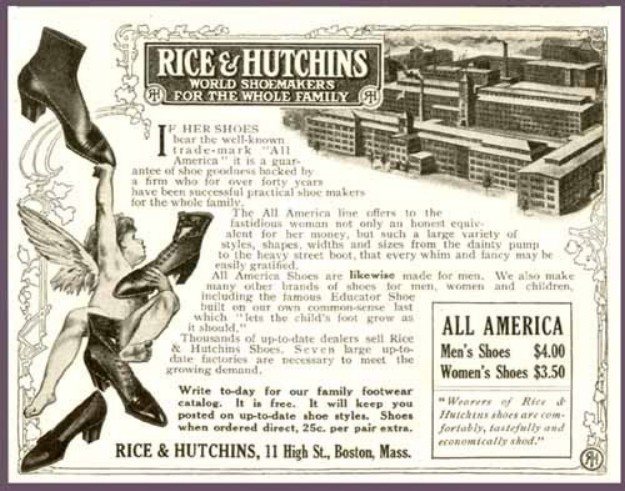
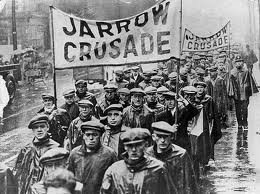
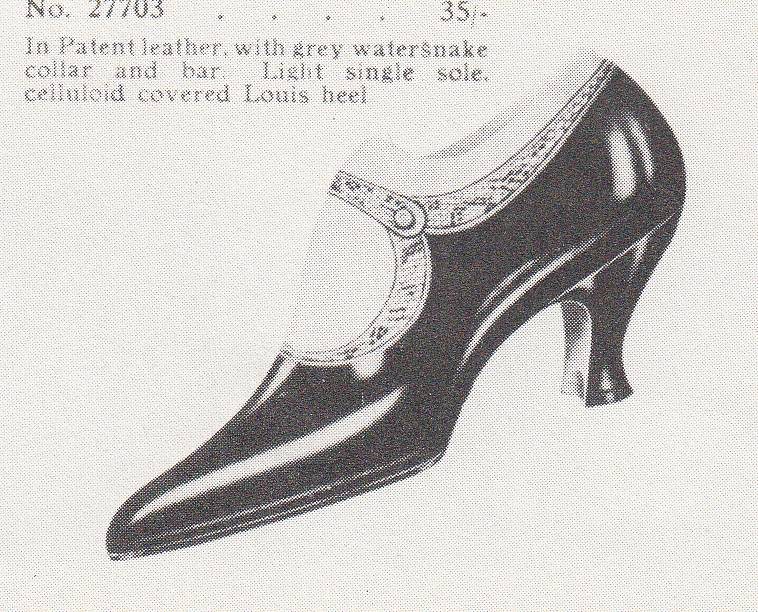
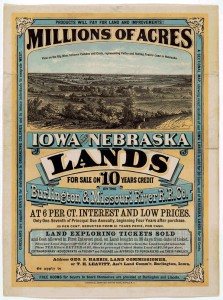
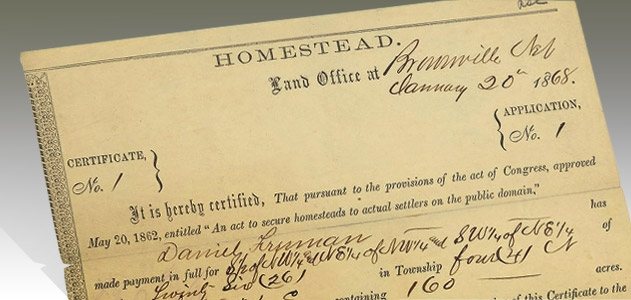
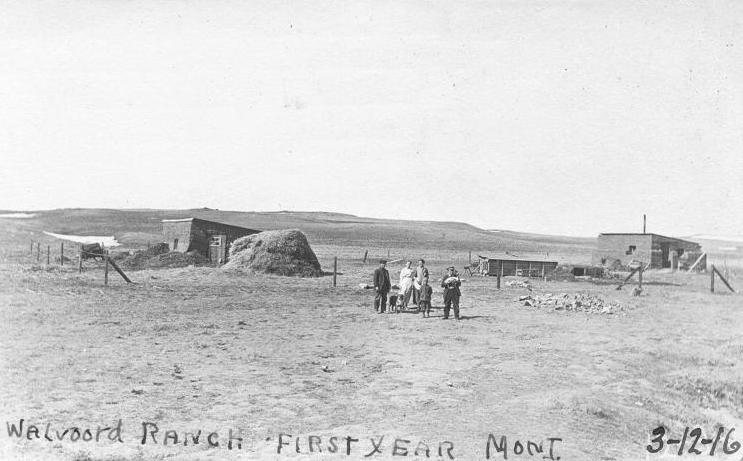

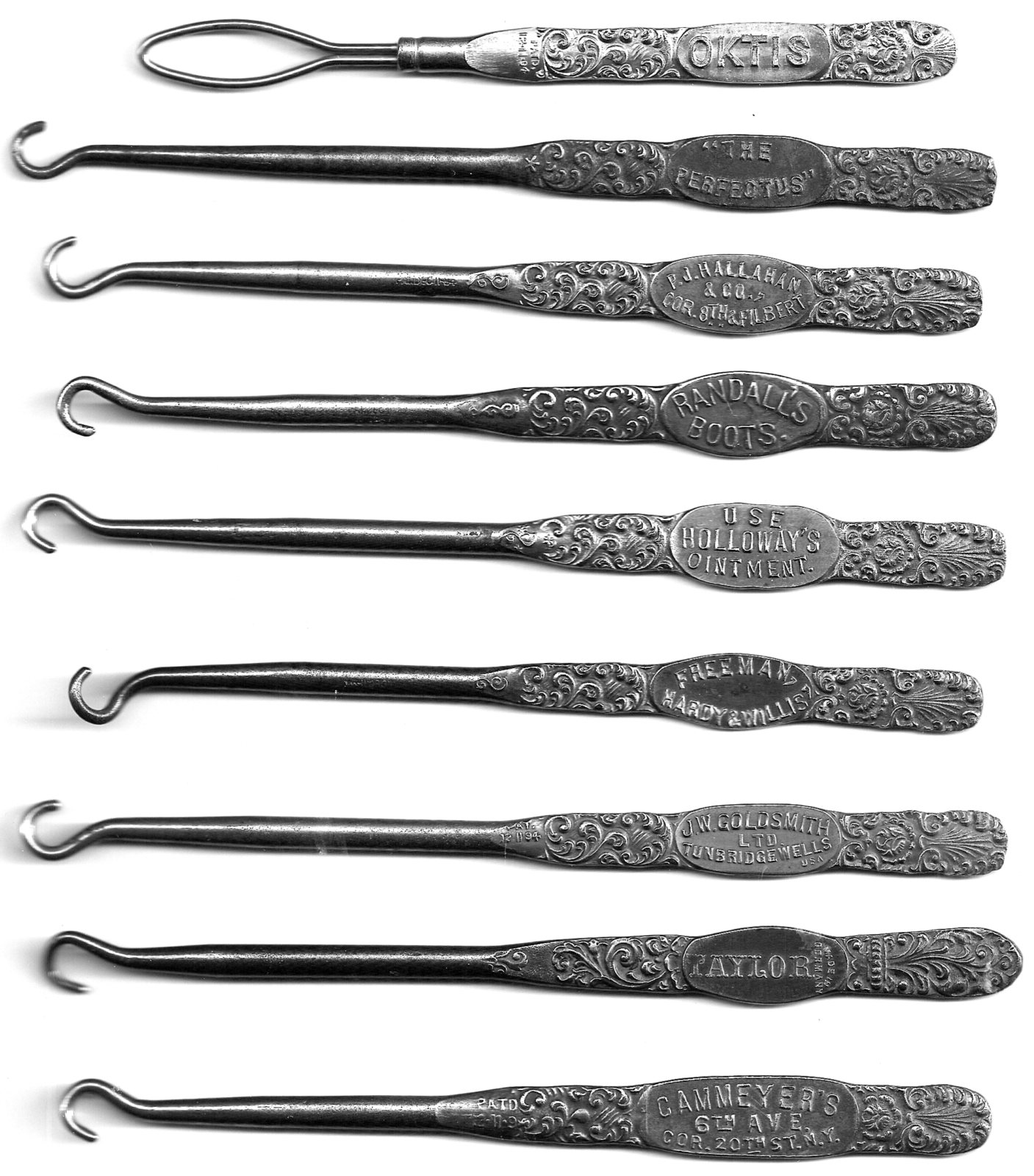
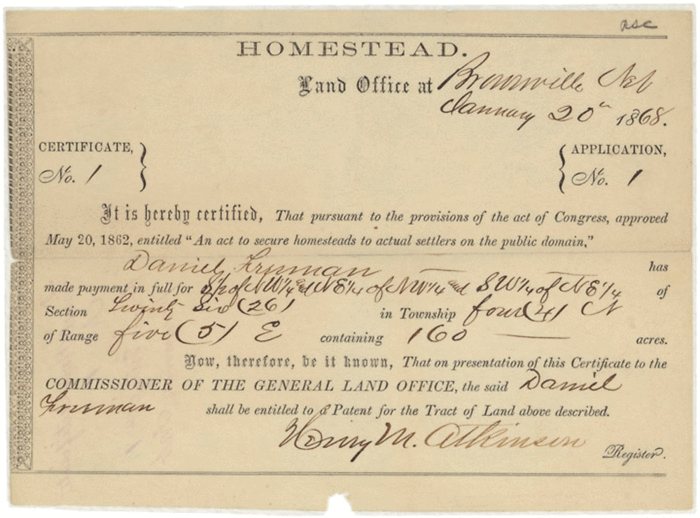
Read the complete, fully designed book: American Buttonhooks (PDF).